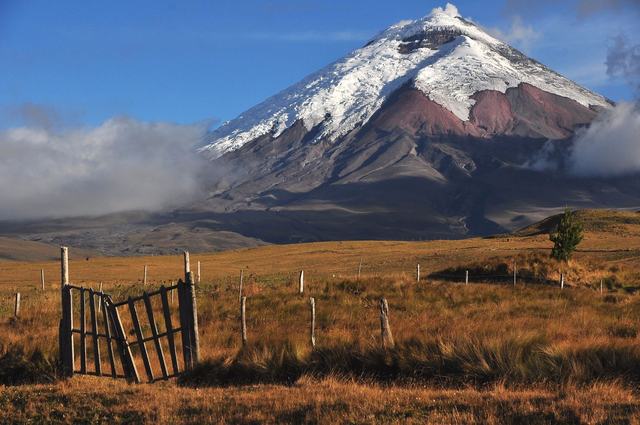
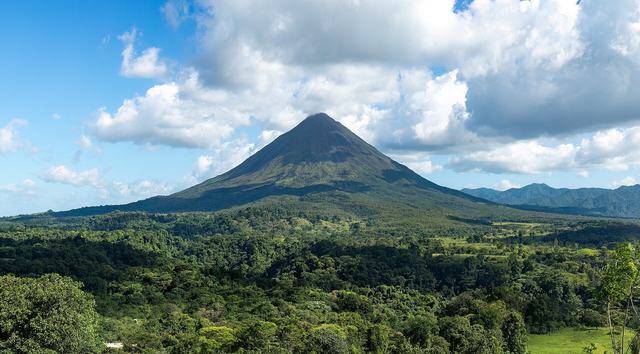
Wildlife found nowhere else on earth, reached by boat or internal flight from mainland Ecuador.
We’ve been hereWildlifeOnce-in-a-lifetimeSnorkelling
Photo: Si & Beth
Journey15h 10m with a stopfrom London Heathrow
Time6 hours behind the UK in winter, 7 hours in summer
Typical stay5 to 8 nights
CurrencyUS dollar ($)
How we book itBuilt by us
Is it right for you?
Who the Galápagos suits
A strong fit for
Wildlife, once-in-a-lifetime trips and honeymoons.
We would think twice for
Travellers who measure holidays in luxury per pound, because Galapagos pricing reflects a protected national park at sea, and the money buys access and expertise rather than marble bathrooms.
What we would want you to know
Island-hopping needs careful planning around permits, boats and internal flights.
We’ve been here
Our own trip to the Galápagos left us convinced that the shape of the visit matters more than the wildlife list. A small ship and an island-hopping stay feel like two different holidays, and choosing between them decides how much of the archipelago you actually see, so that is where our advice starts.
From our trips
The Galápagos, as we filmed it
A turtle over the reefA sea lion on the pier
Filmed by us on the trip itself and shown without sound. No stock footage.
Things to do
Things to do in the Galápagos
HistoryA
Charles Darwin Research Station
On the edge of Puerto Ayora, the station breeds giant tortoises for release and displays Lonesome George, the last tortoise of the Pinta Island species, preserved in a climate-controlled room. Go early, before the heat.
WildlifeB
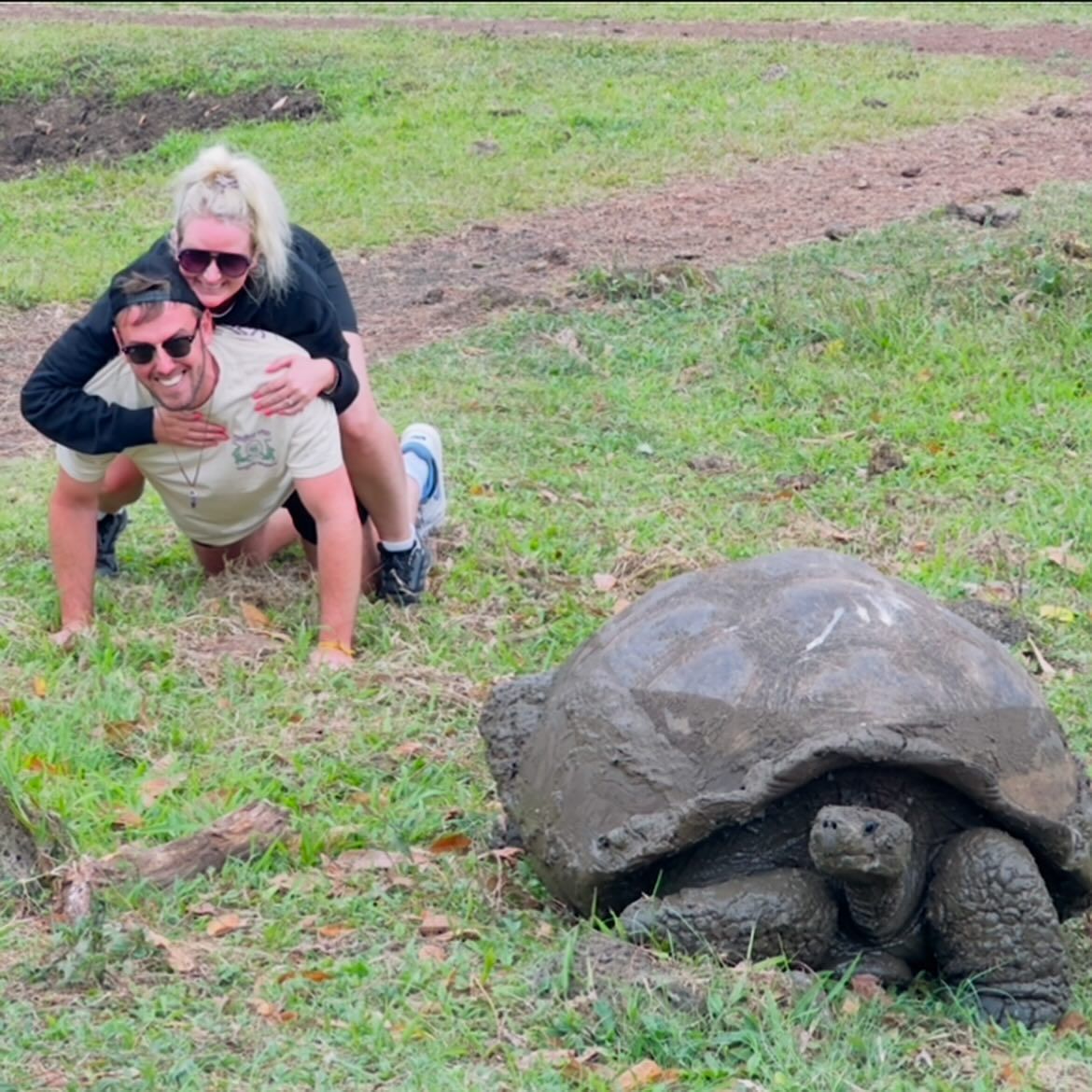
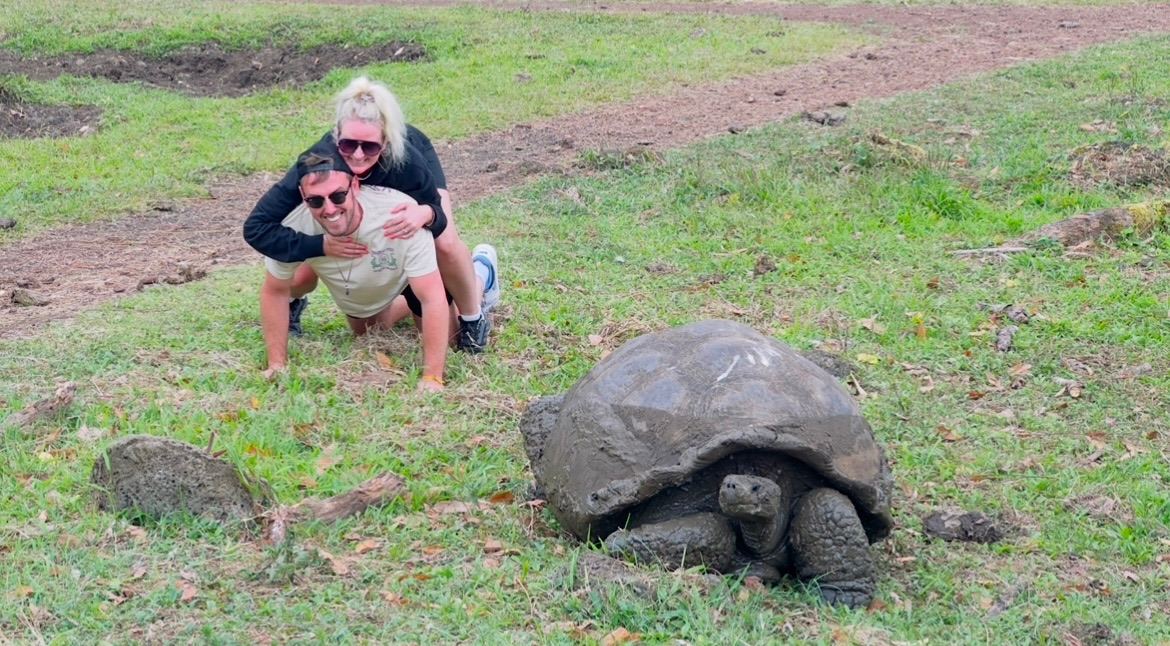
Giant tortoises in the Santa Cruz highlands
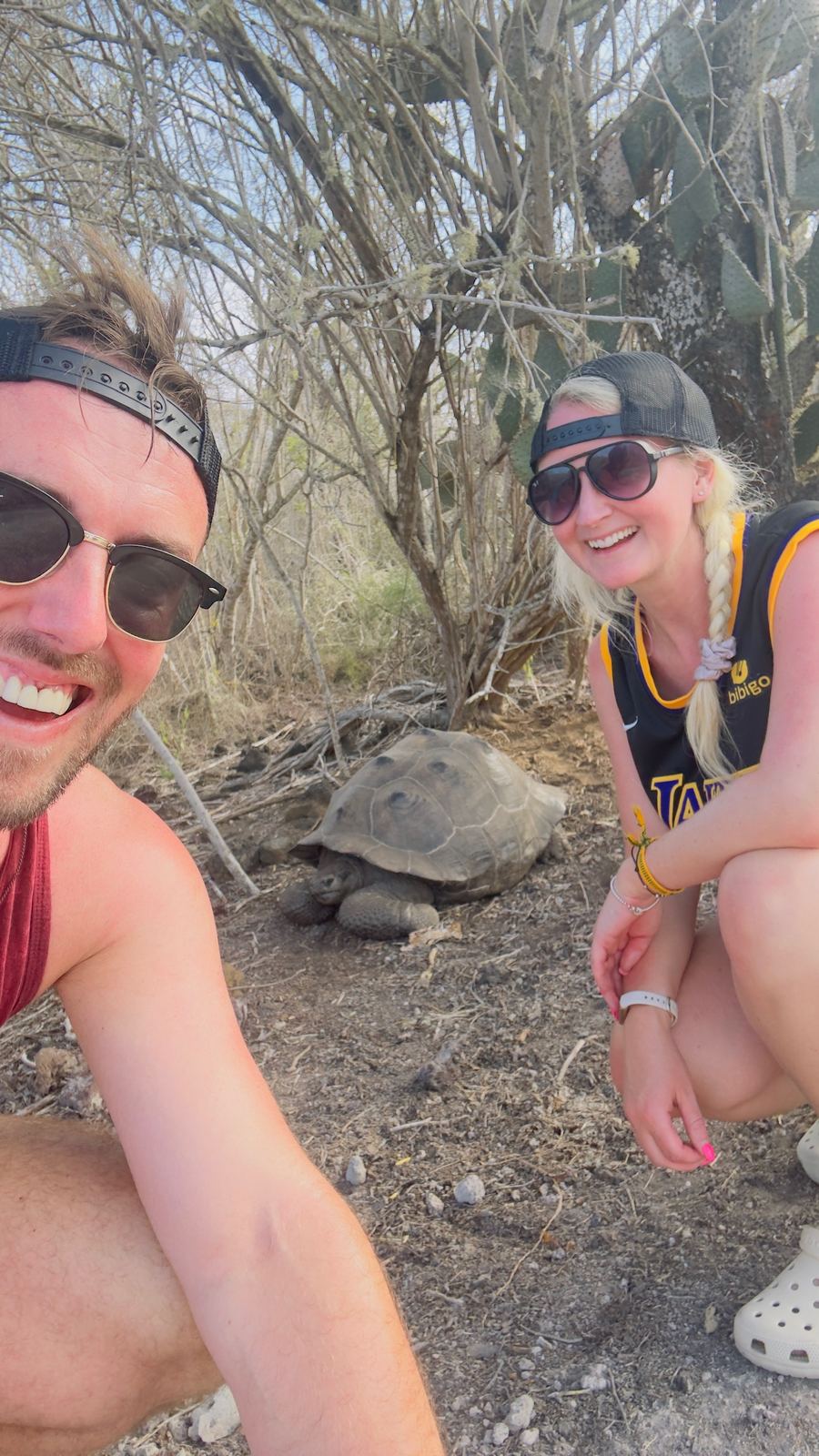
Wild tortoises graze the green highlands, and farms and the El Chato reserve let you walk among them at a respectful distance. Nearby lava tunnels are big enough to walk through. Wear closed shoes, as paths are muddy in the garúa season.
BeachesC
Tortuga Bay
A long white-sand beach reached on foot along a flat path from Puerto Ayora, with marine iguanas on the rocks. The open beach has dangerous currents, so swim in the calm, mangrove-lined cove at its far end instead. The path closes at dusk and there are no shops, so bring water.
On the waterD
Las Grietas
A narrow crevice of clear, cool water between lava walls, reached by water taxi across the harbour and a short walk. A mask helps you see the fish, and early morning beats the tour groups.
Day tripsE
North Seymour
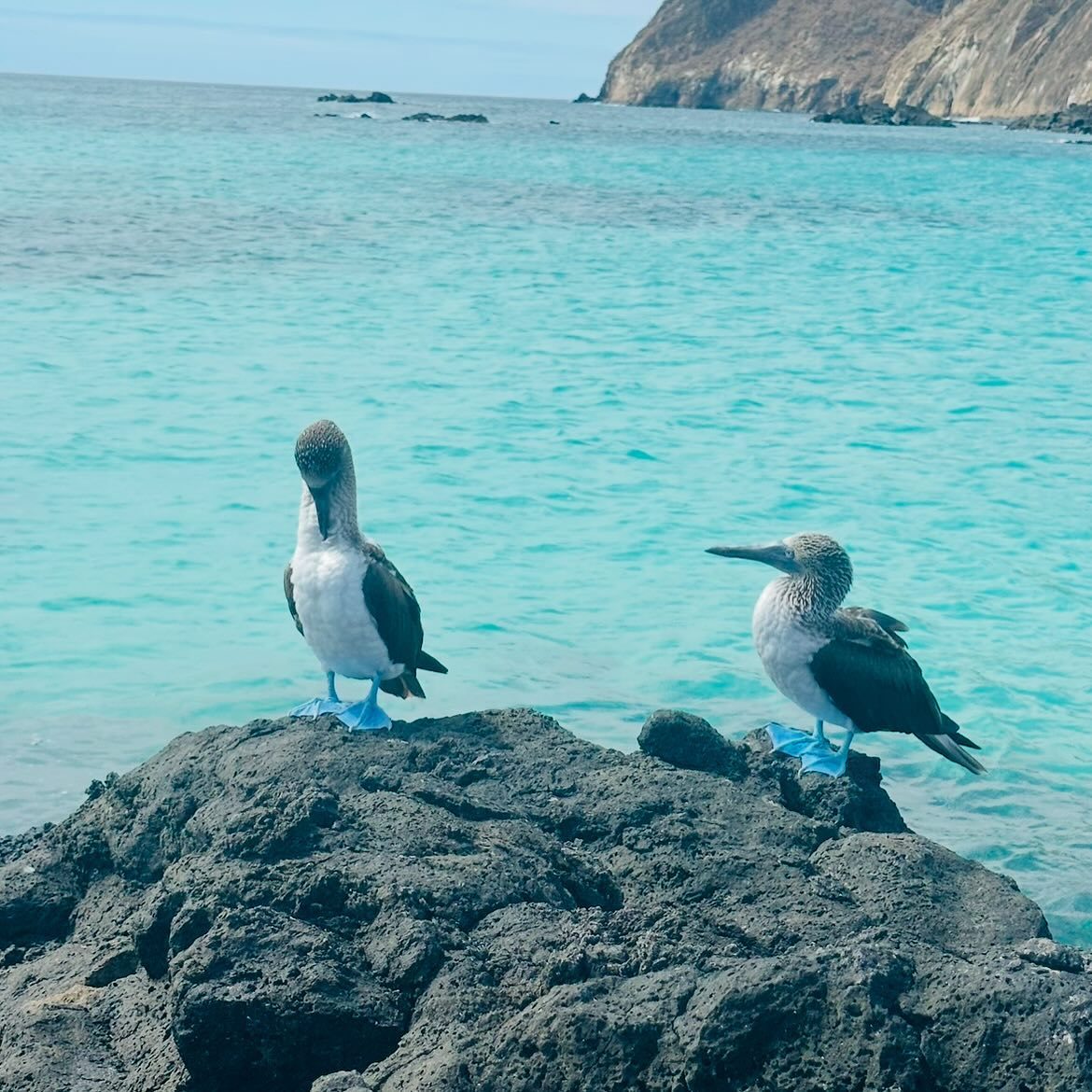
A low, flat island off Santa Cruz with nesting blue-footed boobies, frigatebirds inflating their red throat pouches and land iguanas beside a rocky trail. Only a few boats hold permits to land each day, so book well ahead.
NatureF
Bartolomé
A wooden staircase climbs this young volcanic island to the classic view over Pinnacle Rock and two curving beaches. Galápagos penguins are sometimes seen around the rock, and the snorkelling below it is good.
On the waterG
Kicker Rock
A split volcanic rock off San Cristóbal, where snorkellers and divers swim the channel between its walls with turtles, rays and sharks. Hammerheads are more likely for divers than snorkellers, and the water is deep, so it suits confident swimmers.
AdventureH
Sierra Negra
A long guided hike on Isabela along the rim of a vast volcanic caldera and on to lava fields and cinder cones. Mist often hides the crater early in the cool season, and the sun is fierce when it clears, so bring layers, a hat and plenty of water.
On the waterI
Concha de Perla
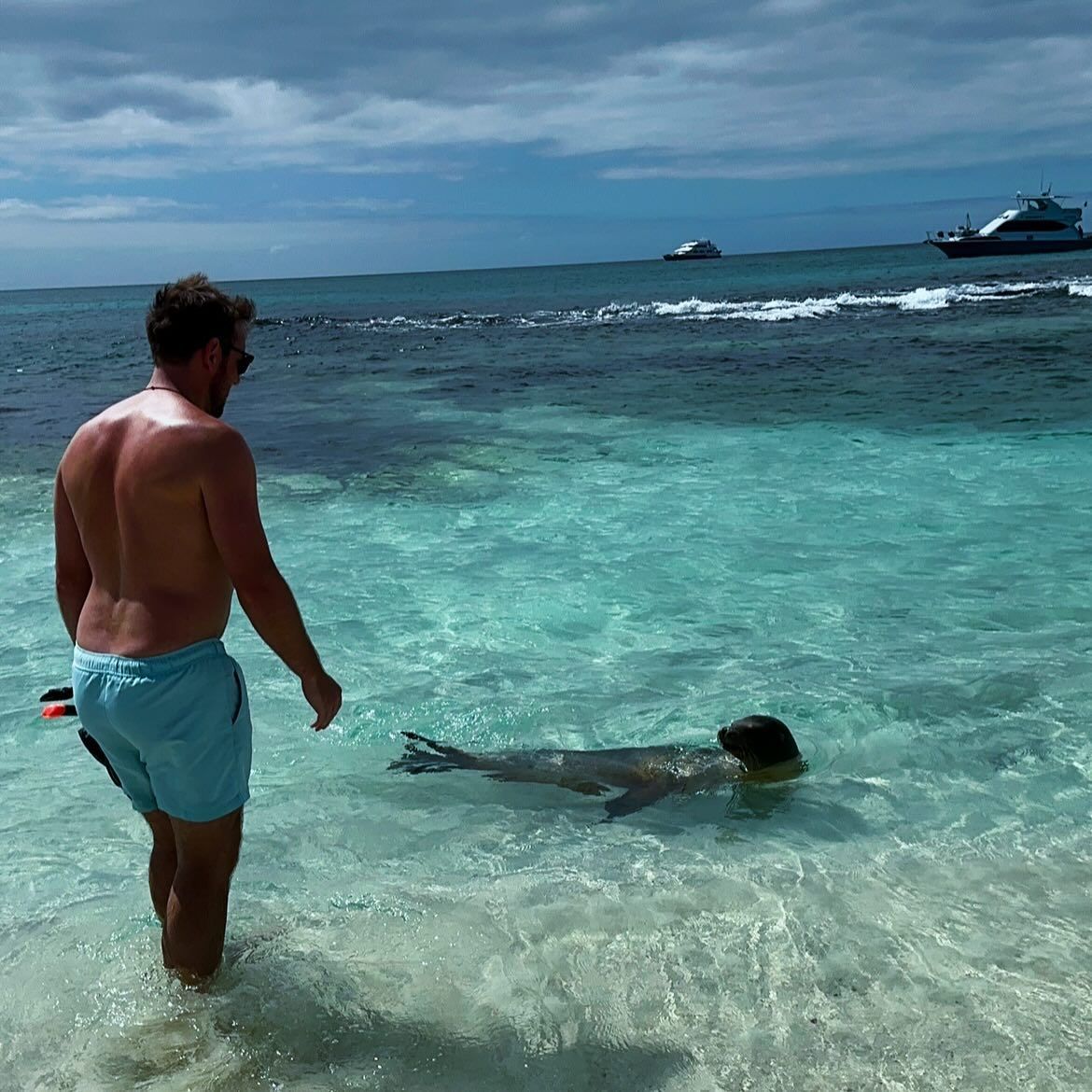
A sheltered lagoon beside Isabela's port, reached by a boardwalk through mangroves, where sea lions often join snorkellers in the water. Calm enough for beginners and children.
History
The Wall of Tears
A wall of lava blocks outside Puerto Villamil, built as pointless punishment by prisoners of a penal colony that ran on Isabela until 1959. It makes a good bike ride from the village, past lagoons and quiet beaches.
Map and areas
Where you will base yourself
Places to stay Things to do Airports
1
Santa Cruz and Puerto Ayora
First visitsDay tripsRestaurants
The archipelago's busiest town and the base for most land-based trips, with a harbour full of water taxis and day boats leaving for the central islands. It has more hotels and places to eat than anywhere else in the islands. The catch is that it feels like a small town rather than a wilderness, and day trips to the further islands mean early starts and long crossings.
The largest island, with a village of sandy streets on a long white beach, flamingo lagoons behind it and penguins sometimes fishing near the harbour. Life is slower and hotels simpler than on Santa Cruz. The speedboat crossing from Santa Cruz is often rough, and cash machines and card payments are less reliable, so bring enough cash.
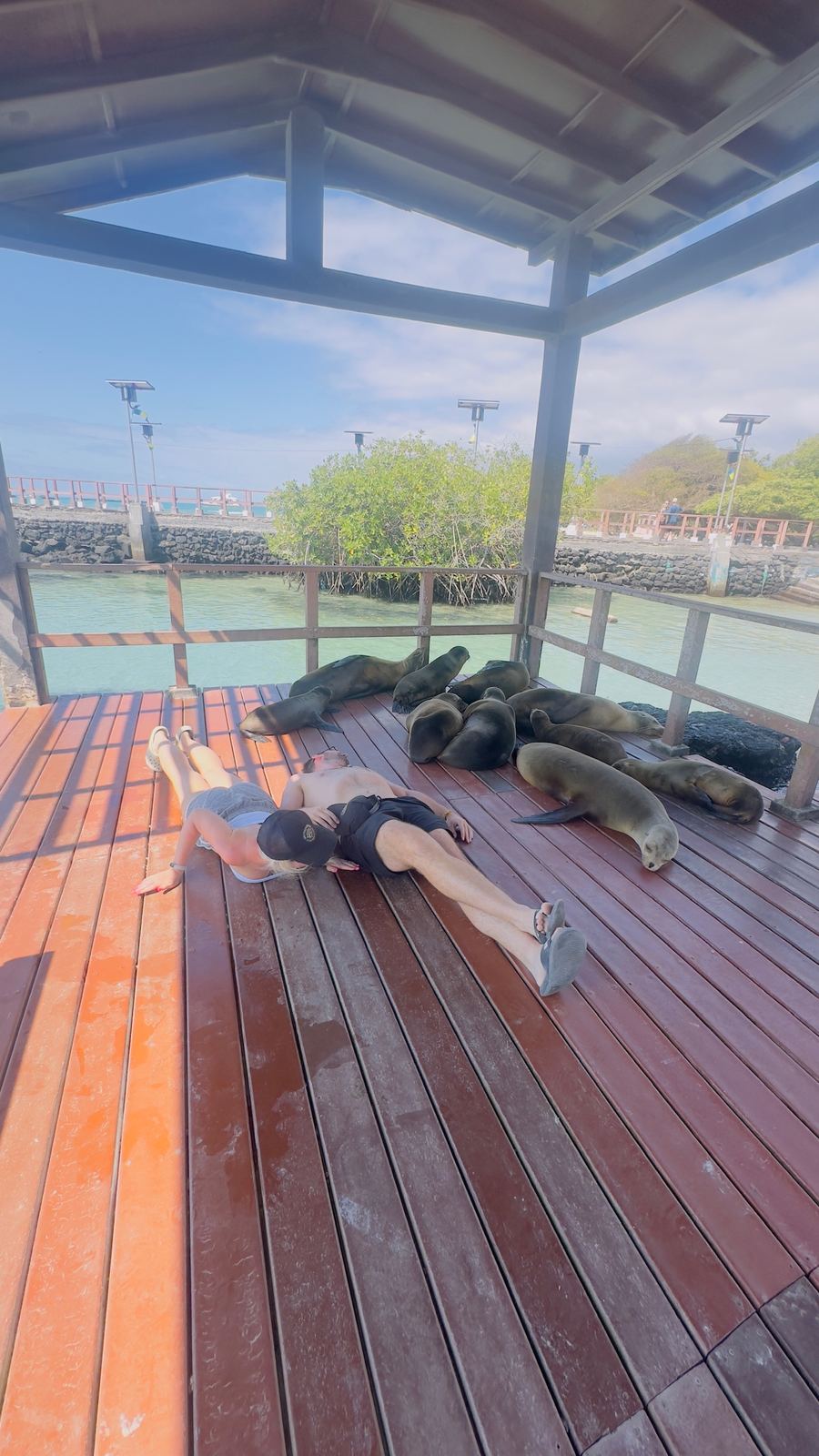
The provincial capital, with an airport on the edge of town and a waterfront where sea lions sleep on the benches, beaches and steps. Trails lead from town to quiet coves, and boats run out to Kicker Rock. It is further from the central islands, so it suits two or three nights at the start or end of a trip, and the sea lions are noisy neighbours at night.
The islands run on ocean currents rather than a summer and a winter. From about December to May the water warms to around 27°C, skies are brighter between short, heavy showers (about 50mm falls in March) and the lowland scrub turns green; seas are usually calmer too. From June the cold Humboldt Current takes over: the sea drops to about 22°C, a fine mist called garúa hangs over the highlands, and the plankton-rich water brings more fish, penguins and sea lions to the snorkelling sites, along with choppier crossings. A wetsuit is worth having from June to November. Christmas, New Year and the July and August holidays book out first.
Worth timing a trip around
April to December
Waved albatrosses on Española
Almost the whole world population of waved albatross nests on Española, arriving around April and leaving by about December. Their bill-fencing courtship dances are a highlight of cruises that call there.
December to May
Green turtle nesting
Green turtles haul themselves up sandy beaches at night to lay their eggs, and their tracks are a common morning sight. Hatchlings emerge a couple of months later.
Around December and January
Christmas iguanas
On Española, marine iguanas turn their brightest red and green in the breeding season, which is how they earned the nickname. One more reason to put Española on a cruise itinerary.
Daytime high to night-time low Sea temperature Rainfall
See the numbers
Month
High
Low
Sea
Rain
January
31°C
24°C
25°C
46 mm
February
31°C
25°C
26°C
80 mm
March
31°C
25°C
27°C
50 mm
April
30°C
24°C
26°C
45 mm
May
30°C
24°C
25°C
36 mm
June
29°C
23°C
24°C
27 mm
July
28°C
22°C
23°C
27 mm
August
28°C
21°C
22°C
29 mm
September
28°C
20°C
22°C
28 mm
October
28°C
21°C
22°C
22 mm
November
28°C
21°C
23°C
25 mm
December
29°C
23°C
23°C
37 mm
Temperatures are 2015 to 2024 averages from NOAA records for Seymour, 32 km away at 63 m. Rainfall is from the GPCC rain-gauge analysis (Deutscher Wetterdienst) for 2010 to 2019 and shows the typical (median) month, so one freak storm does not skew it. Sea temperatures: NOAA OISST, 1991 to 2020.
Shape of the trip
A week island-hopping by speedboat
Nights 1 to 3
Santa Cruz and Puerto Ayora
Land at Baltra and cross to Santa Cruz, stopping for the tortoises in the highlands on the way. Give the next days to Tortuga Bay, Las Grietas and a boat day to North Seymour or Bartolomé.
Nights 4 and 5
Isabela and Puerto Villamil
Speedboat to Isabela for the Sierra Negra hike, snorkelling at Concha de Perla and a bike ride out to the Wall of Tears.
Nights 6 and 7
San Cristóbal and Puerto Baquerizo Moreno
Back through Santa Cruz to San Cristóbal for sea lions on the waterfront, a snorkelling trip to Kicker Rock and the flight out from the island's own airport.
An idea to react to, not a fixed package. We shape the real thing around your dates, your pace and what the flights are doing that season.
Food and drink
What to eat and drink
Puerto Ayora's evening kiosks
After dark, a street of small kitchens in Puerto Ayora sets out tables for grilled fish and seafood straight off the boats. Informal, good value by island standards, and where locals eat.
Brujo
Scorpionfish, a favourite island catch, usually served whole and fried. It looks fierce and tastes delicate.
Spiny lobster
Galápagos lobster is only served while the fishing season is open, so ask rather than assume. Grilled with garlic butter, it is worth the wait.
Encocado de pescado
Fish simmered in coconut milk with peppers and herbs, a dish from Ecuador's coast that island cooks do well, served with rice and fried plantain.
Galápagos coffee
Grown in the misty highlands of San Cristóbal and Santa Cruz and served in island cafés. A bag of roasted beans makes a light souvenir.
Bolón de verde
A ball of mashed green plantain mixed with cheese or pork crackling, the standard coastal breakfast in island cafés, with a fried egg and strong coffee.
Money
What the Galápagos costs
Two fixed costs arrive before any hotel is chosen: the flight from mainland Ecuador and the national park entry fee, both higher than most people expect. After that, the choice between a cruise and a land-based stay sets the price. Small ships with expert naturalists reach the outer islands and cost the most; staying on Santa Cruz and Isabela with day boats costs less but spends more time travelling. The best boats for Christmas and summer sell out many months ahead, often a year.
What things cost there
National park entry fee, foreign adult$200
Transit control card, bought at the mainland airportaround $20
Water taxi across Puerto Ayora harbouraround $1
Speedboat between islands, one wayaround $30 to $40
Snorkel set and wetsuit hire, per dayaround $10 to $20
Guided boat day trip from Santa Cruzaround $150 to $280
Set lunch in Puerto Ayora$6 to $12
Local beer in a harbour bar$3 to $6
Almost everything is shipped from the mainland, so food and drink cost more than in Quito, and the boat days add up quickly.
Typical prices in tourist areas, checked September 2026. A guide to budget with, not a quote.
Flights and transfers
Getting to the Galápagos from the UK
The islands are reached by flight from Quito or Guayaquil after the international legs from the UK, and the park fees and controls are part of arrival. It is a journey of stages, and we plan the mainland nights around it so you arrive rested rather than ragged.
Flights from UK airports
Quito Mariscal Sucre UIO
ManchesterWith a connection, about 15h 45m
London HeathrowWith a connection, about 15h 10m
London GatwickWith a connection, about 16h 30m
Route check September 2026. Some routes are seasonal and schedules change, so we confirm the live options when we quote.
Practical details
Know before you go
Time
6 hours behind the UK in winter, 7 hours in summer
Currency
US dollar ($)
Language
Spanish; naturalist guides speak English
Plugs
Type A and B, 120V
Driving
On the right, though visitors rarely drive
Tap water
Not drinkable; hotels and boats provide purified water, and a refillable bottle saves plastic
Tipping
Cruise crews and naturalist guides are tipped at the end of a trip; restaurant bills often include 10 percent service
Entry for British passport holders
Visa. No visa needed for stays of up to 90 days in any 12-month period.
Passport. Valid for at least 6 months after you arrive.
The FCDO advises against all but essential travel to the coastal provinces, including Guayas and Santa Elena (airside transit at Guayaquil airport is excepted), and within 20km of the Colombian border. The places we suggest on this page were outside those areas when we checked, and we check the advice again before every booking.
Is a cruise or a land-based trip better in the Galápagos?+
It depends on your priorities. A small ship moves between islands overnight and reaches outer sites, such as Genovesa and Española, that day boats rarely or never visit, with a naturalist guide throughout. A land-based trip on Santa Cruz, Isabela and San Cristóbal costs less, suits anyone worried about seasickness and gives you evenings ashore, but spends more time on boats getting to places. Many people combine a short cruise with a few nights on land.
Do you get seasick on a Galápagos cruise?+
Some people do, particularly from June to November when the sea is rougher, and on longer night crossings to the outer islands. Larger boats and catamarans roll less, and cabins low down in the middle of the ship move least. Take seasickness tablets before a crossing rather than after. The inter-island speedboats on a land-based trip can be bumpier still.
How close can you get to the animals?+
Close, but the park rule is to stay at least two metres away and never touch or feed them. The animals often ignore the rule themselves: sea lions flop onto benches beside you and boobies nest right beside the trail. Most visitor sites can only be walked with a licensed naturalist guide, who keeps groups on the marked paths.
How many nights do you need in the Galápagos?+
Five to eight nights suits most people, whether on a ship or on land, and four is the realistic minimum to make the journey worthwhile. We also add at least one night on the mainland before the island flight, so a delayed international connection cannot cost you the start of a cruise.
Is the Galápagos good for children?+
Yes, for children who swim confidently and can walk a few kilometres in the heat, typically from about eight upwards. Some cruise ships set minimum ages, so a land-based trip is often easier for families, with pools, calm beaches and the freedom to rest in the afternoons.
Do you need to be a strong swimmer to snorkel in the Galápagos?+
Not at the beach sites, such as Concha de Perla or the calm cove at Tortuga Bay, where you can stand up. Deep-water snorkelling from boats, at places like Kicker Rock, can involve currents and swell, so it suits confident swimmers; guides carry life vests and floats. The water is cool from June to November, when a wetsuit makes a big difference.
How do you get to the Galápagos?+
Only by air from mainland Ecuador, into Baltra for Santa Cruz or into San Cristóbal. Before check-in you buy a transit card at the mainland airport, and your bags go through a biosecurity check, as fresh fruit, seeds and plants are banned. The national park fee is paid on arrival at the islands.
Photographs
The Galápagos in pictures
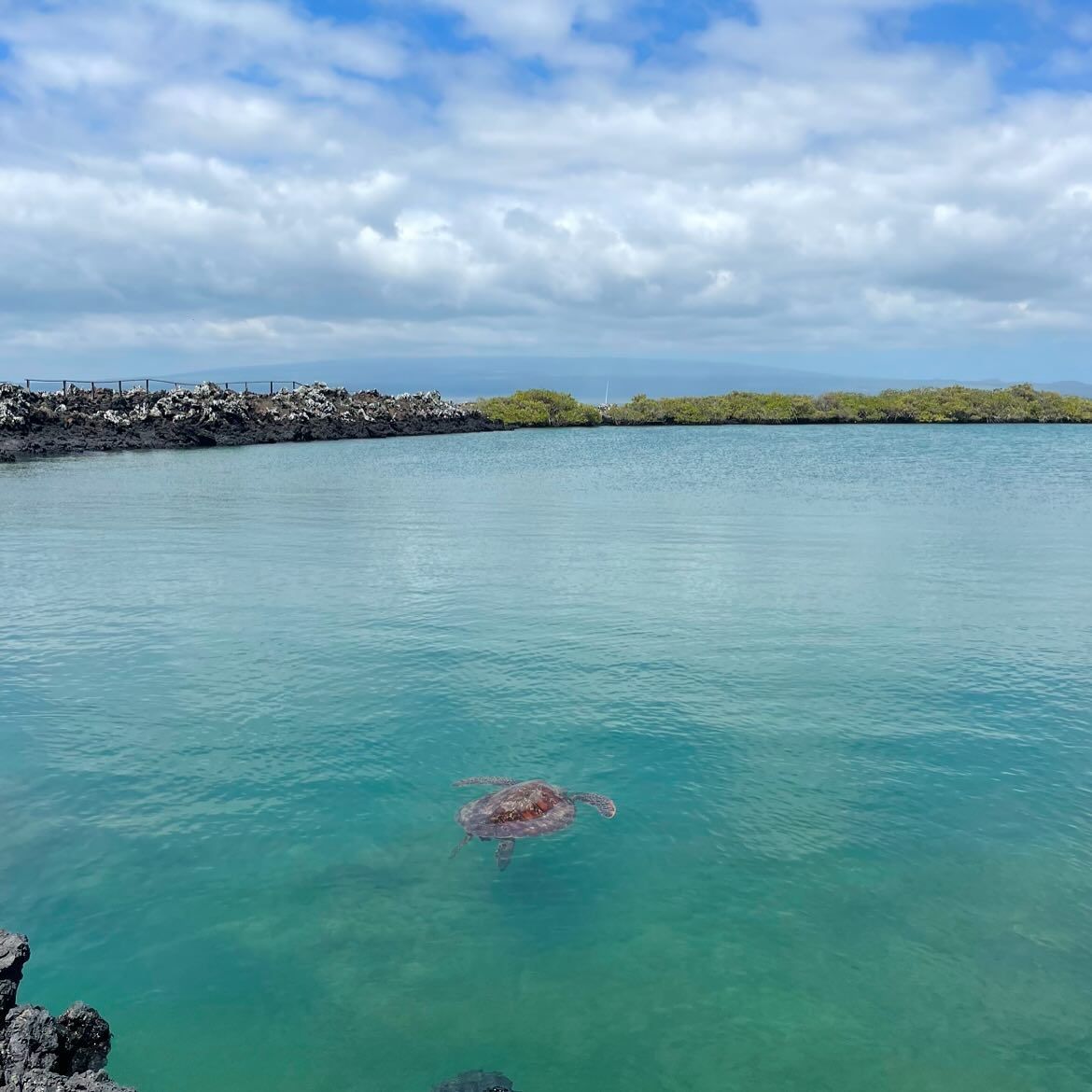
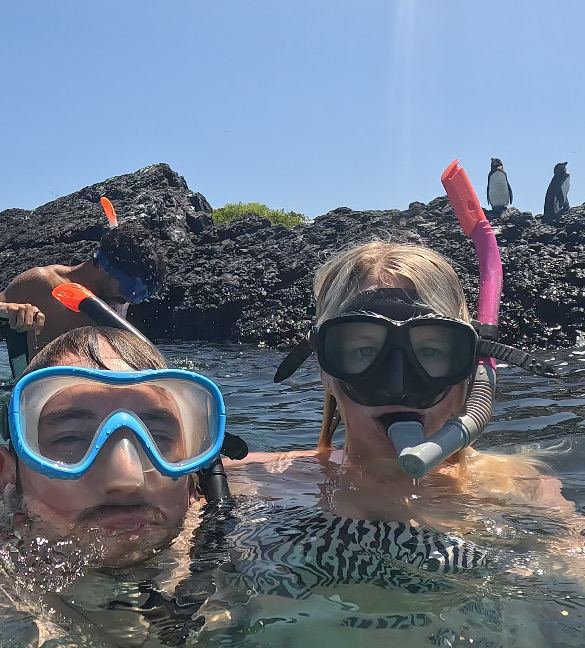
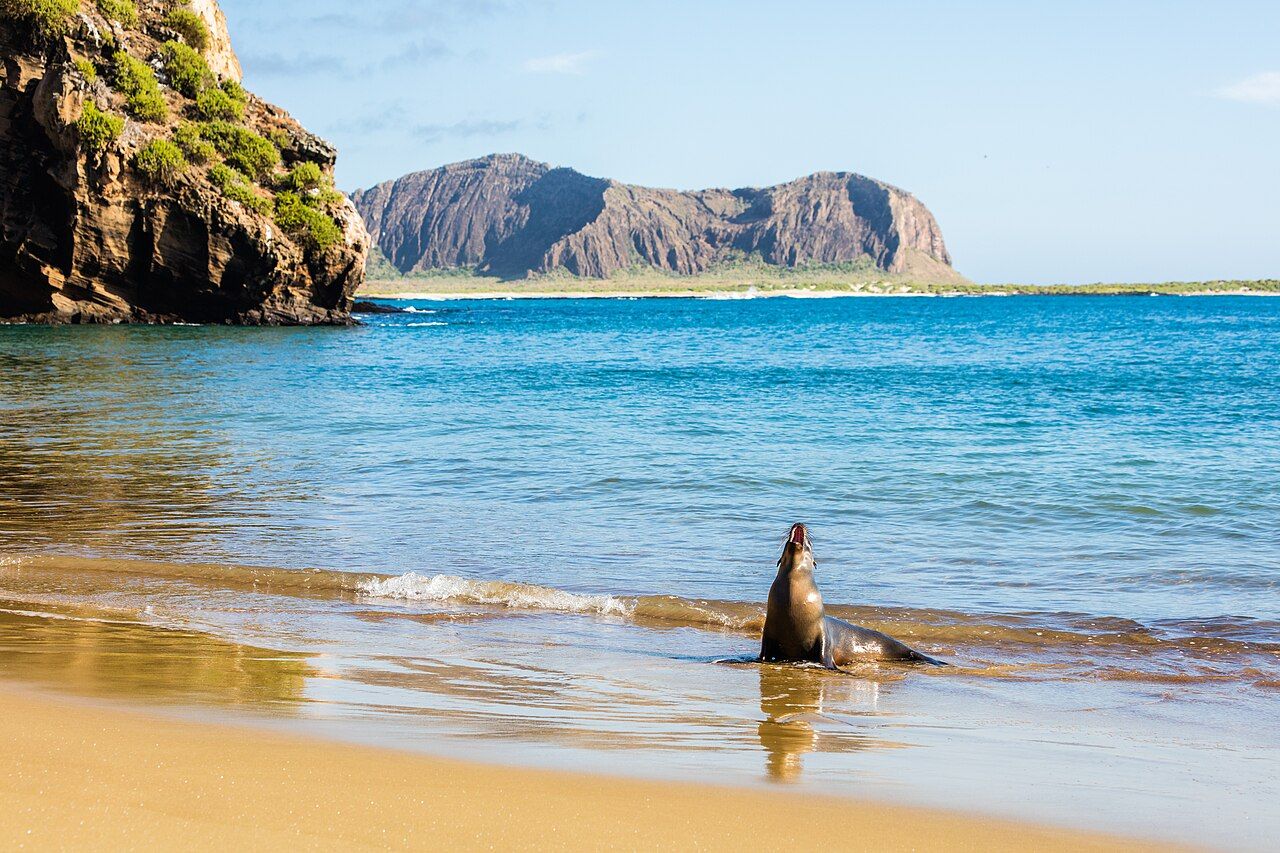
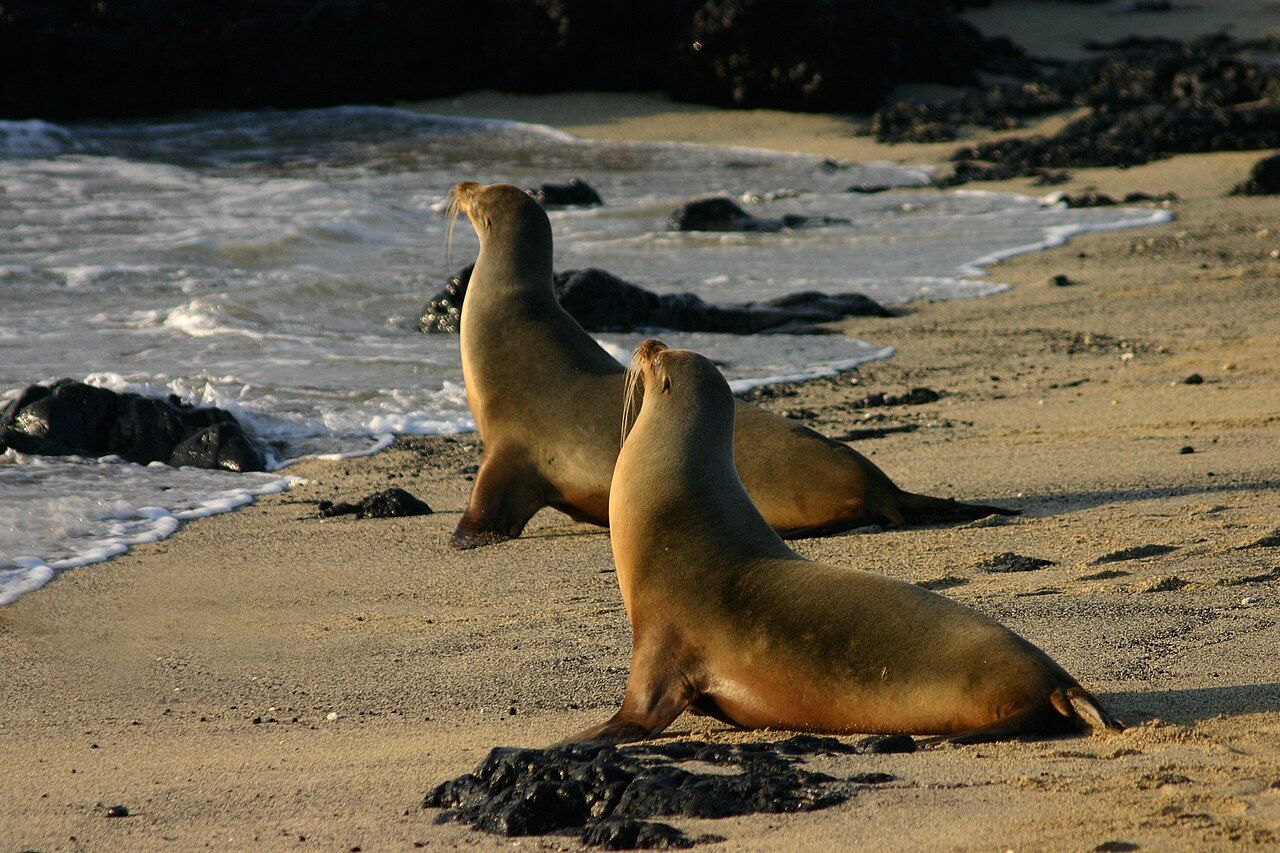
With a giant tortoise Photo: Si & BethBoats in a Galápagos bay Photo: Si & BethSwimming with a sea lion Photo: Si & BethA turtle in the shallows Photo: Si & BethSunset on Isabela Photo: Si & BethPhoto: Si & BethPhoto: Si & BethPhoto: Si & BethPhoto: Si & BethPhoto: Si & BethPhoto: Diego Delso, CC BY-SA 4.0 sourcePhoto: Charles J. Sharp, CC BY-SA 3.0 source
Tell us roughly what you have in mind. We will compare the flights, hotels, routes and operators, explain the trade-offs
and build the version that works for you.