
Fuerteventura

Europe · Beach and resort guide

Fuerteventura

Wide beaches, open landscapes and a quieter feel than many larger resort islands.

Research-led guideBeach loversWatersportsSpace
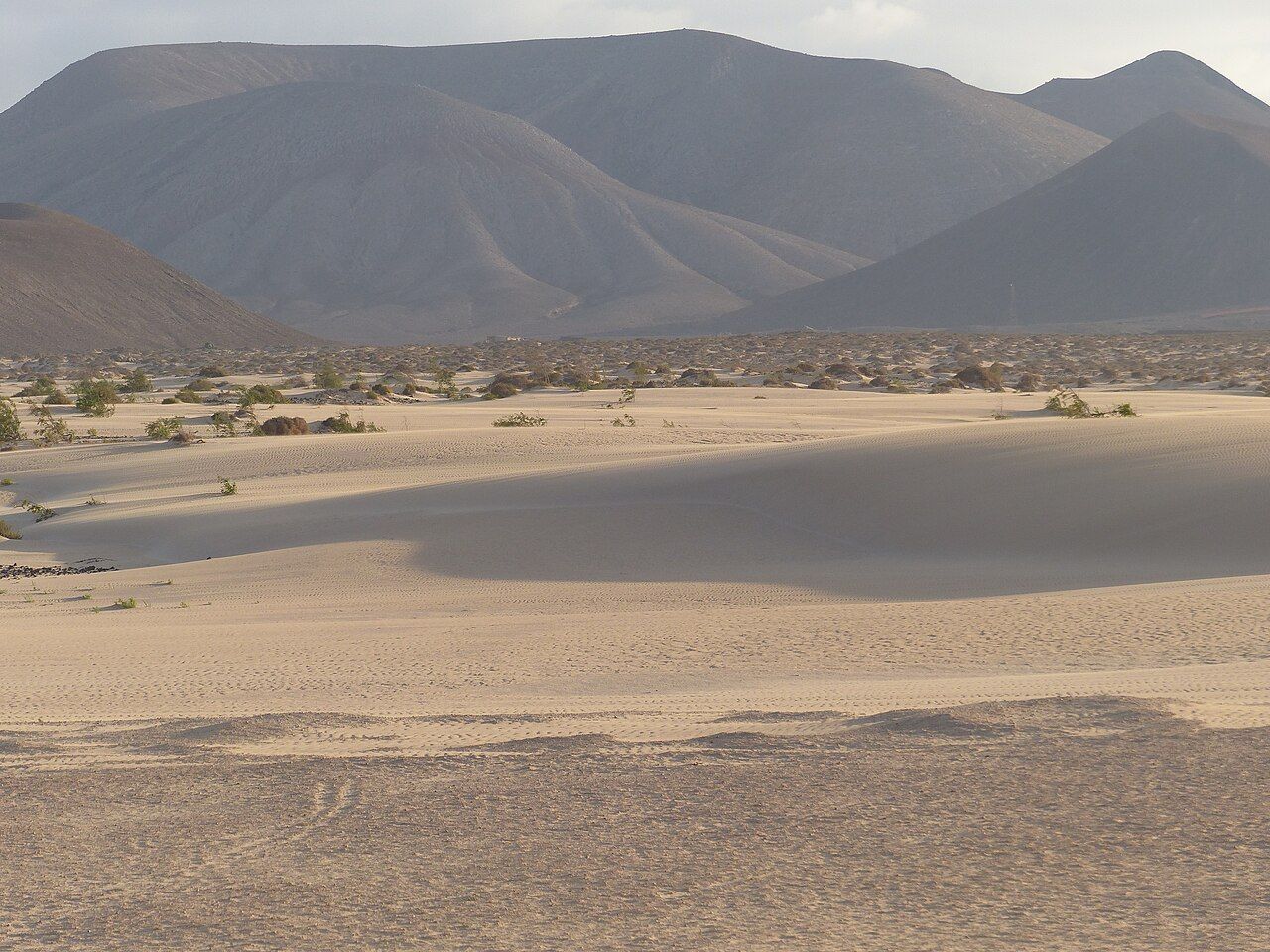
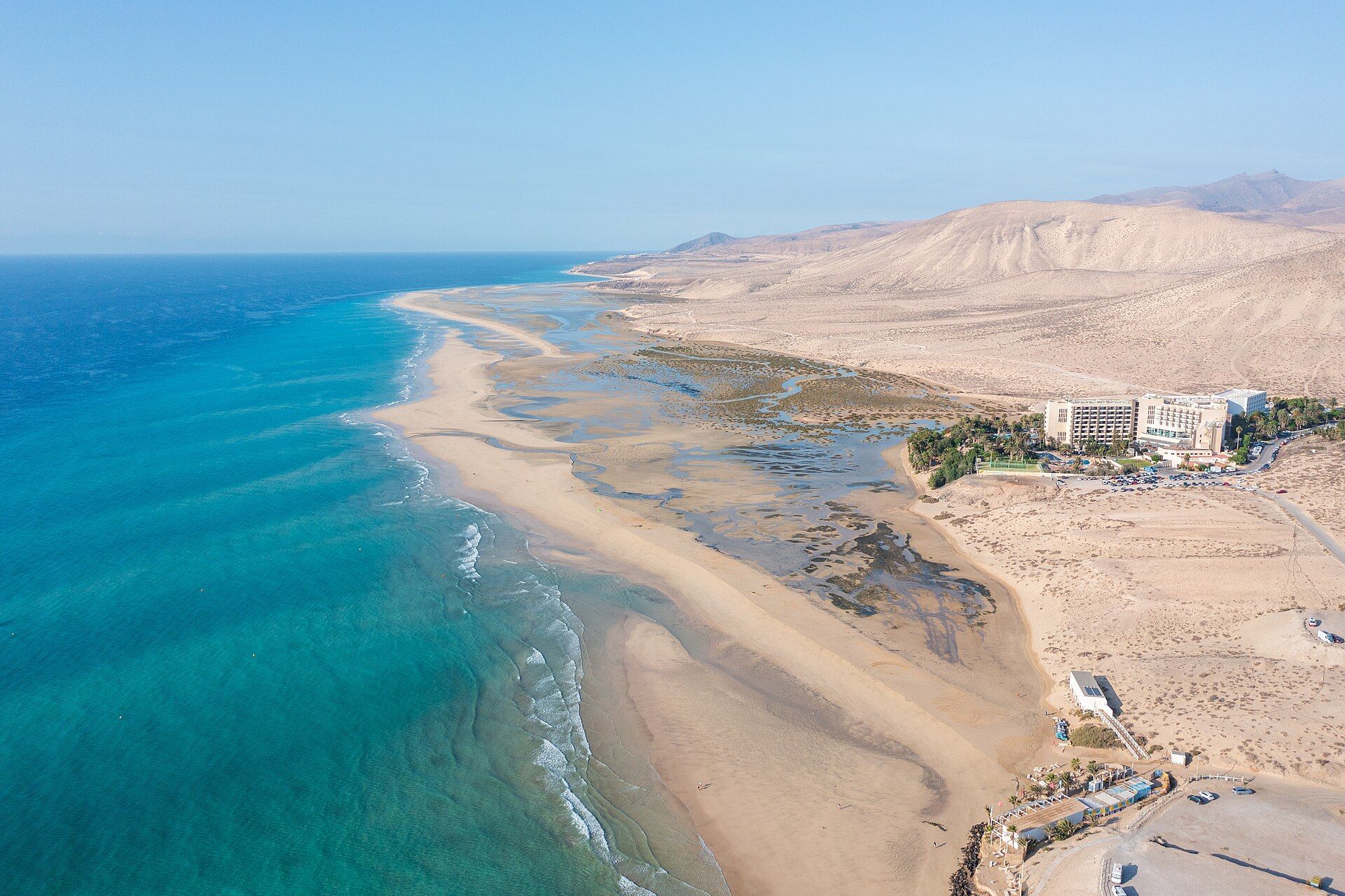
Photo: dirkvorderstrasse, CC BY 2.0 source
Flight4h 15m directfrom Manchester
TimeSame time as the UK
Typical stay7 or 14 nights
CurrencyEuro (€)
How we book itOperator package

Is it right for you?

Who Fuerteventura suits

A strong fit for

Beach-led holidays, families and watersports.

We would think twice for

Travellers wanting a compact, walkable resort with lively evenings, because many of the best hotels here are deliberately spread out, and the wind that makes the beaches spectacular is part of the deal.

What we would want you to know

Wind and isolated hotel locations deserve checking.

Our research-led view

We have not holidayed on Fuerteventura ourselves, so this page is built from research, mapping and the hotel detail we gather for enquiries. That groundwork matters more here than on the busier islands, because the resorts are far apart and some of the best beach hotels stand alone, with little within walking distance.

We have not been here ourselves yet and will never pretend otherwise. This advice comes from the operator, mapping, hotel and transfer research we do for real enquiries.

Map and areas

Where to stay in Fuerteventura

1

Corralejo

CouplesFamilies who like to eat outWatersports

The island's liveliest resort and a real town, with a harbour, a pedestrian old centre of bars and fish restaurants, and boats to Lobos. The dunes and long white beaches begin just south of town, so most hotels are a walk or a short drive from the best sand. It is breezy, and the town beaches themselves are small.

about 58 min from FUE Open in Google Maps
2

El Cotillo

Independent travellersSurfersSunsets

A fishing village on the north-west coast with an old harbour, an 18th-century watchtower and sunsets over the Atlantic. Calm, shallow coves lie just north of the village, while the long beach to the south takes the full surf. Most places to stay are apartments and small hotels, so it suits people happy to self-cater and drive.

about 1h 03m from FUE Open in Google Maps
3

Caleta de Fuste

Young familiesShort transfersGolf

A purpose-built resort near the airport, set around a horseshoe bay where the water stays calm and shallow enough for toddlers. There is a marina, an old stone watchtower, golf inland and a flat promenade. It lacks the character of Corralejo, but for a first family holiday that is often a fair trade.

about 36 min from FUE Open in Google Maps
4

Costa Calma

Beach loversKitesurfersBig hotels

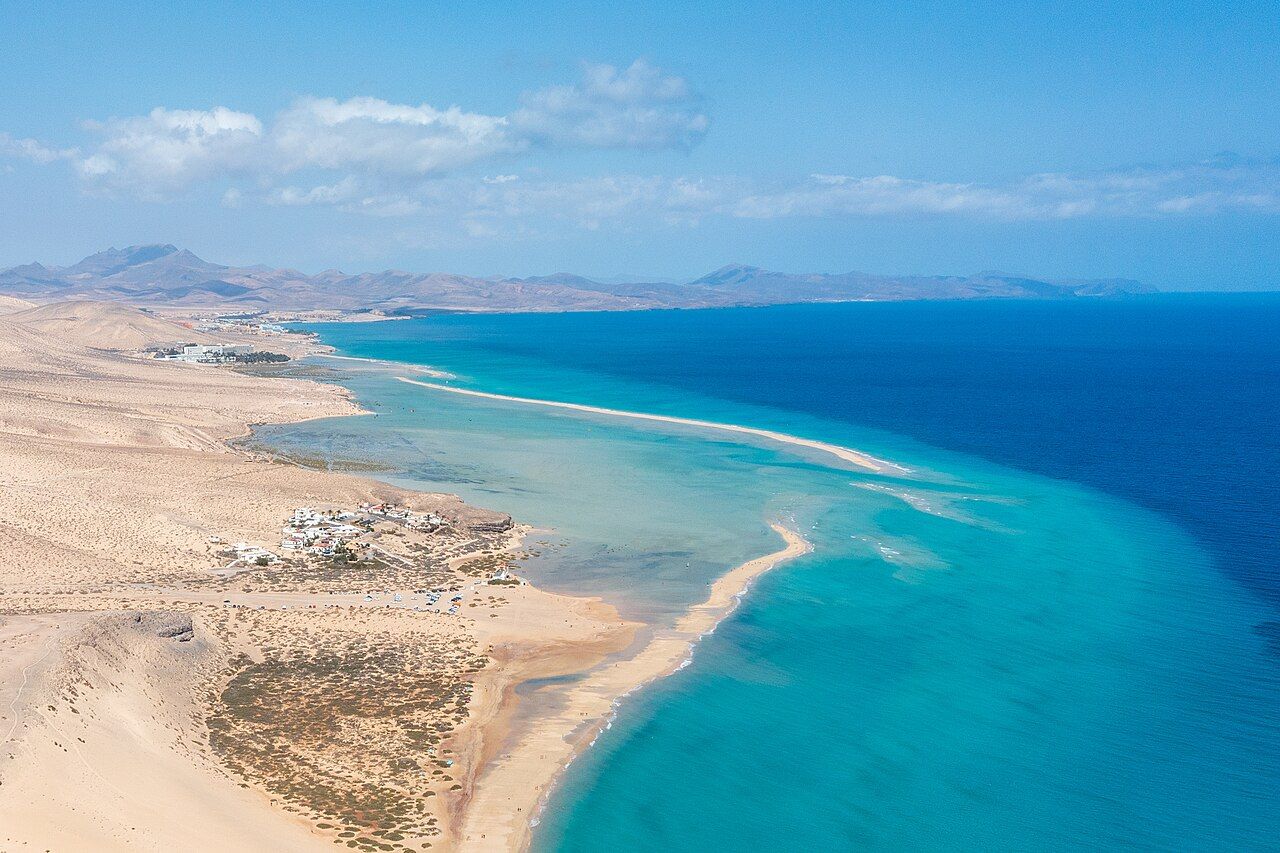
A string of large hotels among planted trees where the Jandía peninsula begins, with long beaches below low cliffs and the Sotavento lagoon just to the south, where the wind picks up and the kite schools gather. There is no real town centre and the main road runs through the middle, so most guests stay in their hotel between beach days.

about 1h 24m from FUE Open in Google Maps
5

Morro Jable

Long beach walksOlder couplesQuiet evenings

The southern end of the resort coast, where a long, gently shelving beach runs past a lighthouse and a protected salt marsh to the old fishing town, with its harbour and seafront bars. It is usually less windy than the beaches further north, but it is the furthest resort from the airport, which matters on a late arrival.

about 1h 41m from FUE Open in Google Maps

Weather and seasons

When to go to Fuerteventura

On Fuerteventura the wind changes through the year far more than the temperature does. January days average 21°C and August ones about 28°C, while the sea is coolest in late winter and warmest in early autumn, reaching around 23°C in October. July and August bring the strongest, steadiest wind: good news for the kite and windsurf schools at Sotavento, less so for sunbathers on the exposed Jandía beaches, who make use of the stone windbreaks. Autumn usually brings lighter breezes as well as the warmest water, which is why we like October and November for families. Easter and the winter half terms book up first.

Worth timing a trip around

February or March

Carnival in Puerto del Rosario and Corralejo

Smaller and more local than the big carnivals of the western islands, with street parades, costume contests and dances, ending with the burial of the sardine, a mock funeral that closes the season.

Usually November

International Kite Festival, Corralejo

Kite fliers from across Europe fill the sky above the Corralejo dunes for a long weekend, with giant show kites and displays. It is free to watch and worth timing an autumn trip around.

Daytime high to night-time low Sea temperature Rainfall
January: 2 mm of rainFebruary: 7 mm of rainMarch: 3 mm of rainApril: 0 mm of rainMay: 0 mm of rainJune: 0 mm of rainJuly: 0 mm of rainAugust: 0 mm of rainSeptember: 0 mm of rainOctober: 3 mm of rainNovember: 1 mm of rainDecember: 4 mm of rainJanuary: highs 21°C, lows 15°CFebruary: highs 21°C, lows 15°CMarch: highs 22°C, lows 16°CApril: highs 24°C, lows 17°CMay: highs 25°C, lows 18°CJune: highs 26°C, lows 20°CJuly: highs 28°C, lows 22°CAugust: highs 28°C, lows 22°CSeptember: highs 27°C, lows 22°COctober: highs 27°C, lows 21°CNovember: highs 24°C, lows 19°CDecember: highs 22°C, lows 17°CJanuary: sea 19°CFebruary: sea 18°CMarch: sea 18°CApril: sea 19°CMay: sea 20°CJune: sea 21°CJuly: sea 22°CAugust: sea 22°CSeptember: sea 23°COctober: sea 23°CNovember: sea 22°CDecember: sea 20°C21°15°J21°15°F22°16°M24°17°A25°18°M26°20°J28°22°J28°22°A27°22°S27°21°O24°19°N22°17°D
See the numbers
MonthHighLowSeaRain
January21°C15°C19°C2 mm
February21°C15°C18°C7 mm
March22°C16°C18°C3 mm
April24°C17°C19°C0 mm
May25°C18°C20°C0 mm
June26°C20°C21°C0 mm
July28°C22°C22°C0 mm
August28°C22°C22°C0 mm
September27°C22°C23°C0 mm
October27°C21°C23°C3 mm
November24°C19°C22°C1 mm
December22°C17°C20°C4 mm

Temperatures are 2015 to 2024 averages from NOAA records for Fuerteventura/Aeropuerto, 6 km away at 25 m. Rainfall is from the same station and shows the typical (median) month, so one freak storm does not skew it. Sea temperatures: NOAA OISST, 1991 to 2020.

Sand, shingle and swimming

Beaches in Fuerteventura

Grandes Playas, Corralejo

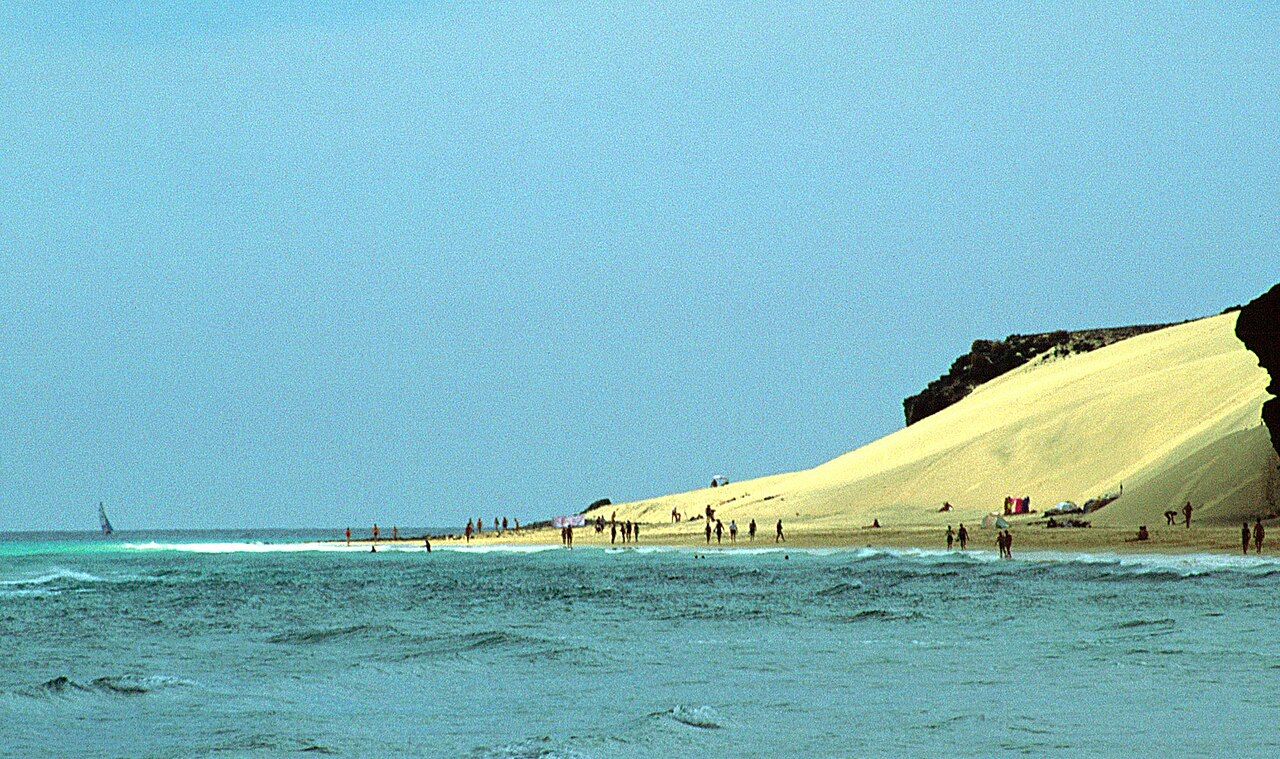
A long run of white sand along the edge of the protected dunes, with shallow, turquoise water. It is exposed to the wind, there is almost no shade and currents run in places, so swim where others are swimming, watch the flags and bring a windbreak.

Playa de Sotavento

A vast beach where a sandbar traps a shallow lagoon at low tide, warm and still enough for children to paddle. The strong wind that fills the sails of the kite and windsurf schools also sends sand flying, so it is best for watersports and long walks.

Cofete

A wild, empty beach on the far side of the Jandía mountains, reached by a long unpaved road. Powerful currents make it unsafe for swimming, and many hire contracts exclude dirt roads, so check yours or take the four-wheel-drive bus from Morro Jable.

Playa de los Lagos, El Cotillo

A chain of sheltered coves north of El Cotillo, where ledges of black rock keep the sea shallow and still at low tide. The sand is pale and the setting quiet, and it suits toddlers and parents who can manage without facilities.

Caleta de Fuste beach

A horseshoe of golden sand around a sheltered bay, with sunbeds and gentle, shallow water that makes it an easy first beach for toddlers. It fills up by midday, so arrive early for a spot near the water.

Things to do

Things to do in Fuerteventura

Day tripsA

Isla de Lobos

A small, protected island a short boat ride from Corralejo, with a path to the lighthouse and a calm, shallow bay at La Concha for snorkelling. Visitor numbers are capped, so book the free online permit for your time slot before buying the boat ticket, and take plenty of water.

HistoryB

Betancuria

The island's first capital, founded in the early 1400s in a sheltered valley that raiders could not see from the sea. The church of Santa María and the whitewashed lanes fill an hour, and the mountain roads in and out give wide views over the interior.

NatureC

Calderón Hondo

A walk from near Lajares up the side of an extinct volcano to a rim looking down into a deep crater. The path is loose in places, so wear sturdy shoes, and resist feeding the Barbary ground squirrels that beg along the way.

On the water

Surf, kite and windsurf lessons

Surf schools in Corralejo and El Cotillo take beginners to the gentler northern breaks, while kite and windsurf lessons happen on the lagoon at Sotavento. Book group lessons ahead in school holidays, and choose a school that picks the beach by the day's conditions.

History

Windmills of the interior

Tower windmills and smaller wooden mills that once ground the island's grain still stand on the plains around Tefía, Tiscamanita and Antigua. They make good stops on a drive through the dry, open centre of the island.

CultureD

Church of Nuestra Señora de Regla, Pájara

The inland village church has a stone doorway carved with suns, snakes and birds that many see as Aztec in style, a reminder of the island's old links with Spanish America. It pairs well with Betancuria on a morning's drive.

Wildlife

Birdwatching on the plains

The stony plains of the north and centre hold the rare houbara bustard and the Fuerteventura stonechat, a bird found only on this island. Go early with binoculars and keep to existing tracks, since the bustards nest on the ground.

Food and drink

What to eat and drink

  • Goat, roasted or stewed

    Goat is the island's meat: kid roasted with garlic and herbs, or older goat stewed slowly with spices. Inland village restaurants are the place to try it, usually at lunchtime.

  • Vieja

    Parrotfish, the prized local catch, usually grilled or boiled and served with potatoes and a green sauce. Look for it in the harbour towns of Morro Jable and El Cotillo.

  • Lapas

    Limpets grilled in their shells with garlic and oil and finished with green mojo, eaten hot with bread to mop up the juices. A standard starter in the fishing villages.

  • Pulpo a la plancha

    Octopus grilled until charred at the edges and dressed with garlic and oil, a staple of the simple harbourside restaurants in villages such as Pozo Negro and Ajuy.

Shape of the trip

North to south in a week

  1. Days 1 to 3

    Corralejo

    Start in the north: the Grandes Playas, a morning boat to Lobos with your permit booked, and dinner in the old town.

  2. Day 4

    El Cotillo

    Walk up Calderón Hondo on the way west, spend the afternoon in the calm coves north of the village and stay for sunset by the old tower.

  3. Day 5

    Betancuria

    Cross the windmill plains to the old capital and Pájara's carved church, then follow the road south to your second base.

  4. Days 6 and 7

    Costa Calma

    Finish on the Jandía beaches: the Sotavento lagoon at low tide and, if your hire contract allows it, the dirt road over the mountains to Cofete.

An idea to react to, not a fixed package. We shape the real thing around your dates, your pace and what the flights are doing that season.

Money

What Fuerteventura costs

Fuerteventura often gives more beach and more hotel for the money than the busier islands. The big southern hotels compete hard on all inclusive, which makes sense there because little lies outside the gates. In Corralejo, where the town is half the fun, bed and breakfast or half board usually works out better. The extras to plan for are a hire car, since the island is long and the resorts far apart, and lessons or kit hire if watersports are the reason for the trip.

Flights and transfers

Getting to Fuerteventura from the UK

Direct flights run year-round from Leeds Bradford, Manchester and Newcastle. Transfers vary a lot: Caleta de Fuste is minutes from the airport, while the southern Jandía beaches are well over an hour, which is exactly the sort of thing we flag before you book rather than after.

Flights from UK airports

Fuerteventura FUE

  • Leeds BradfordDirect, about 4h 25m
  • ManchesterDirect, about 4h 15m
  • NewcastleDirect, about 4h 25m

Route check September 2026. Some routes are seasonal and schedules change, so we confirm the live options when we quote.

Practical details

Know before you go

Time

Same time as the UK

Currency

Euro (€)

Language

Spanish

Plugs

Type C and F, 230V

Driving

On the right

Tap water

Desalinated and safe, but few people drink it for the taste, and bottled water is sold everywhere

Tipping

Not expected; leave the change in bars and around 5 to 10 percent for good restaurant service

Entry for British passport holders

Visa. No visa needed for tourist stays of up to 90 days in any 180-day period across the Schengen area.

Passport. Issued less than 10 years before you arrive, and valid for at least 3 months after the day you leave the Schengen area.

The EU Entry/Exit System is now in use, so you may be asked to register your fingerprints and photo at the border on your first visit. It is free.

Summarised from the FCDO travel advice on gov.uk, checked 29 September 2026. Rules change: read the current entry requirements and the full travel advice before you go.

Questions we get asked

Fuerteventura FAQs

Where is the most sheltered beach on Fuerteventura?+

Caleta de Fuste's horseshoe bay has the calmest water, the coves north of El Cotillo are still at low tide, and the beach at Morro Jable is usually less windy than Sotavento or the Corralejo dunes. No beach here is windless in summer, so claim one of the stone windbreak circles on the sand early in the day.

Should we stay in the north or the south of Fuerteventura?+

The north, around Corralejo, if you want a town with restaurants and bars, easy boat trips and the dunes close by. The south, around Costa Calma and Morro Jable, if the beach is the whole point and you are happy to spend evenings at the hotel. The two ends are far apart, so choose one base rather than planning to commute.

Is Fuerteventura good for families with toddlers?+

Yes, if you choose the resort carefully. Caleta de Fuste has a calm, shallow bay close to the airport, and the Sotavento lagoon is good for paddling at low tide. Avoid the exposed west-coast beaches, and in summer check that the hotel's pool area is sheltered from the wind.

Are Fuerteventura's beaches safe for swimming?+

The resort beaches are, in normal conditions, but much of the west coast is not: Cofete, the long beach south of El Cotillo and other stretches facing the open Atlantic have strong currents and heavy surf. Swim where there are lifeguards, respect the flags, and keep inflatables out of the water when the wind blows offshore.

How far apart are Fuerteventura's resorts?+

Further than most people expect. The island is long and narrow, with Corralejo at the northern tip and Morro Jable near the southern one, a long drive apart, and Caleta de Fuste roughly in the middle beside the airport. Day trips from end to end are possible but tiring, so choose your base by the beach you want most.

Is Fuerteventura too quiet at night?+

It depends where you stay. Corralejo's old town has bars and restaurants that stay busy late, Caleta de Fuste has a handful of bars and hotel entertainment, and the southern resorts are quiet by design. If nightlife matters to you, choose Corralejo or consider another island.

Your world, your way

Thinking about Fuerteventura?

Tell us roughly what you have in mind. We will compare the flights, hotels, routes and operators, explain the trade-offs and build the version that works for you.

Start your trip