
Bosnia and Herzegovina

Europe · Touring guide

Bosnia and Herzegovina

Mostar's bridge and Sarajevo's history, often combined with a Croatian coastal trip.

We’ve been hereHistoryMostarAuthenticity
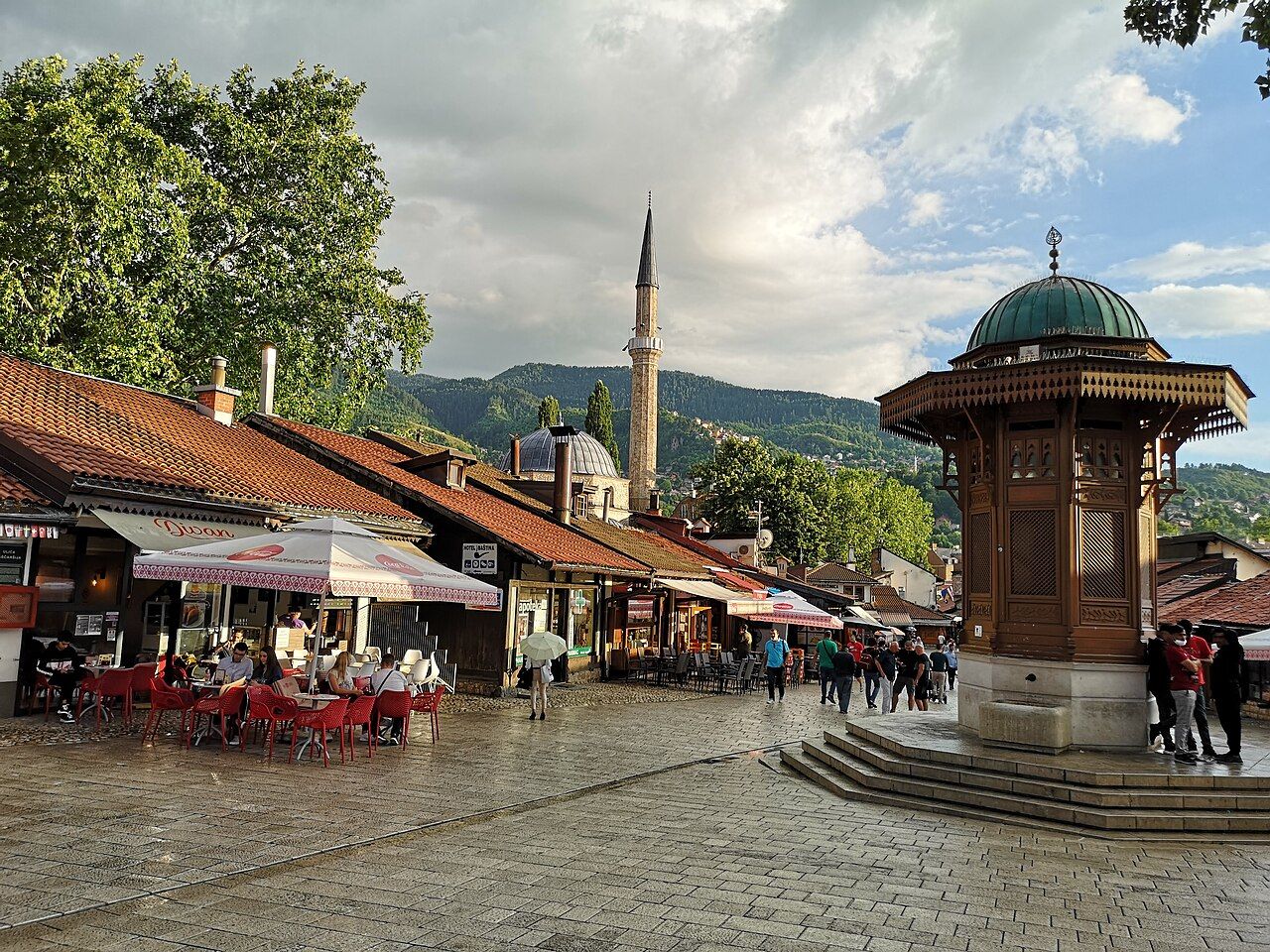
Photo: Ramirez, CC BY-SA 4.0 source
Flight2h 50m directfrom Leeds Bradford
Time1 hour ahead of the UK
Typical stay3 to 5 nights
CurrencyConvertible mark (BAM, KM); euros often accepted in tourist areas
How we book itBuilt by us

Is it right for you?

Who Bosnia and Herzegovina suits

A strong fit for

Culture, history and travellers extending a Croatia trip inland.

We would think twice for

Travellers wanting resort comforts and easy gloss, because Bosnia wears its recent history openly, and its power is precisely that nothing about it is packaged.

What we would want you to know

Mountain roads make internal journeys slower than distances suggest.

We’ve been here

Our own trip into Bosnia and Herzegovina is the reason we push clients to go inland from the Croatian coast, and to stay rather than rush through on a coach day. The food, the faiths and the recent history all shift within a morning's drive, and the country only makes sense if you slow down enough to listen.

The route

Five nights inland from the Dalmatian coast

  1. Night 1

    Trebinje

    Cross from Dubrovnik into Herzegovina for the plane-tree square, the Ottoman Arslanagić Bridge and a first glass of Žilavka.

  2. Nights 2 and 3

    Mostar

    Stop at Počitelj and Blagaj on the way, then stay in the old town to see the bridge quiet at dusk. In summer, give Kravice a morning for a swim.

  3. Nights 4 and 5

    Sarajevo

    Follow the Neretva gorge north, rafting near Konjic if the season suits, then spend two days on Baščaršija, the Tunnel of Hope and the cable car up Trebević.

  4. Day 6

    Jajce

    Fly home from Sarajevo, or return to the coast via the waterfall at Jajce and the Pliva watermills for a flight out of Split.

An idea to react to, not a fixed package. We shape the real thing around your dates, your pace and what the flights are doing that season.

Map and stops

The places on the route

Places to stay Things to do Airports
1

Mostar

HistoryPhotographersOvernight stops

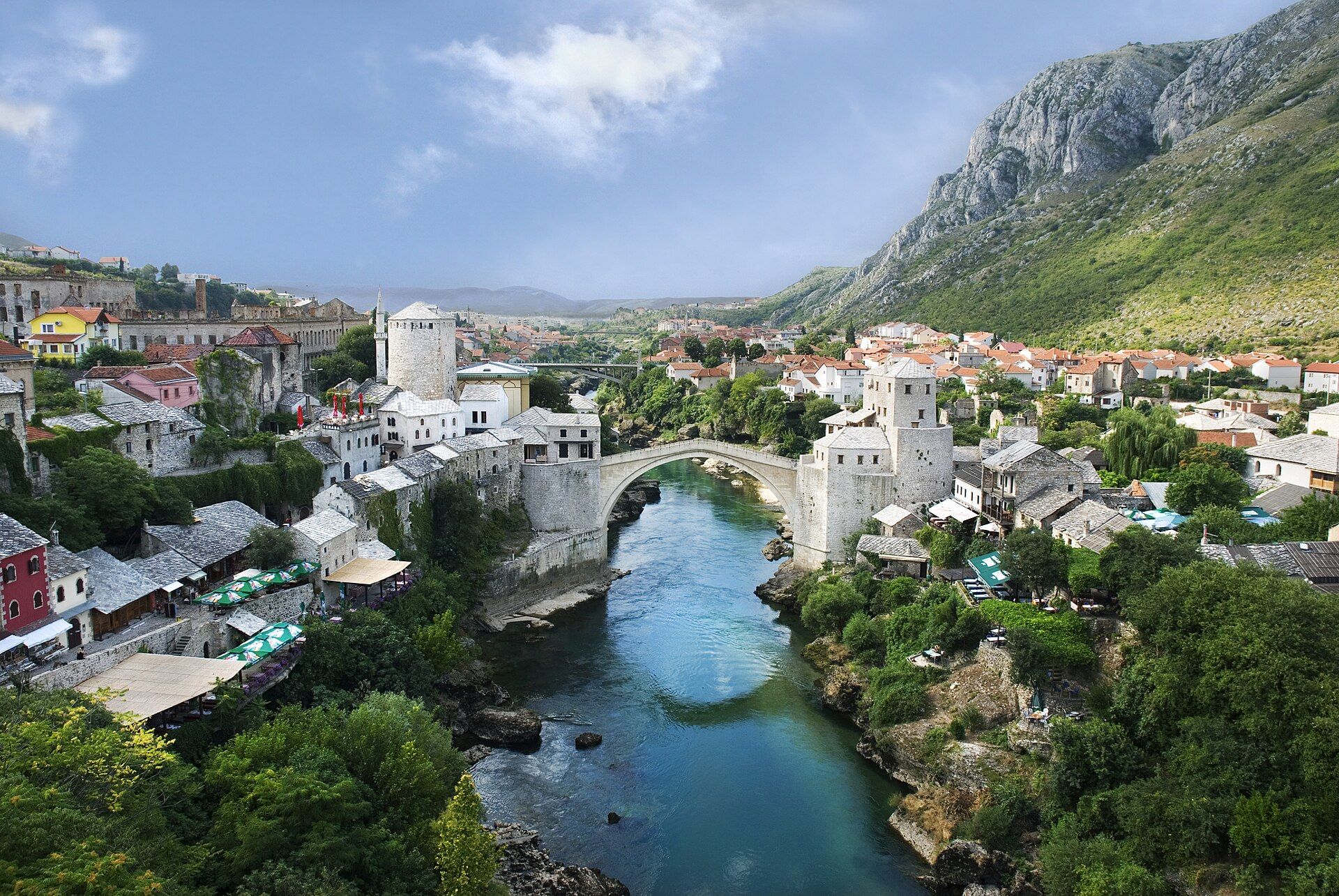
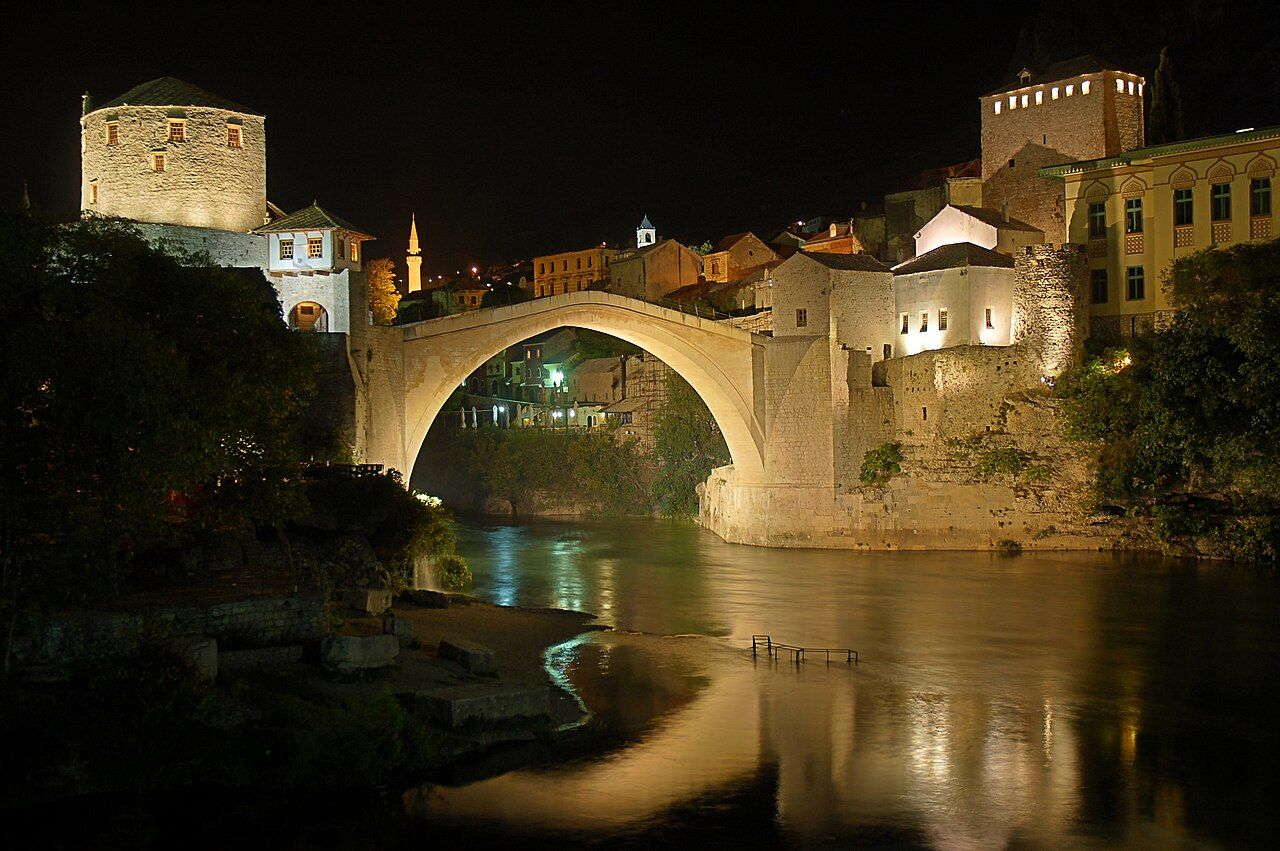
The rebuilt Old Bridge arches over the green Neretva, with the Ottoman bazaar lanes of Kujundžiluk climbing away on the east bank. Day-trippers from the coast pack it from late morning to late afternoon, so an overnight stay gives you the bridge at dusk and dawn. The stone lanes are polished smooth, and flat leather soles slide about on them.
2

Sarajevo

CultureRecent historyCoffee culture

Ottoman lanes around Baščaršija give way to Austro-Hungarian avenues within a few steps, marked by a line in the pavement on Ferhadija. Two nights is the minimum. Many guesthouses sit on the steep hillsides above the old town, which matters for luggage and tired legs, and winter heating can leave the valley under smog.

3

Trebinje

First night from DubrovnikWineQuiet evenings

A relaxed Herzegovinian town close to the Croatian border, with a small walled old town, plane trees shading the market square and vineyards on the surrounding hills. It makes a gentle first night inland after Dubrovnik. Evenings are café terraces and little else, which is exactly the point for most people who stop here.

4

Jajce

WaterfallsBreaking a long driveFamilies

A hill town with a waterfall crashing into the river in its centre, a medieval fortress above and wooden watermills on the Pliva lakes just outside. It breaks the long drive between Sarajevo and the Dalmatian coast near Split. One night is plenty, and the fortress climb is steep.

Weather and seasons

When to go to Bosnia and Herzegovina

Mostar lies low in the Neretva valley and bakes in high summer: July averages 35°C, so sightseeing works best before ten and after five, and the bridge divers have the afternoon heat to themselves. Sarajevo sits higher and stays several degrees cooler, which is why a summer route runs better finishing there. May and early June bring rivers at full flow and Mostar at around 25°C. October stays mild for walking, at about 23°C in Mostar, with the grape harvest under way. Late autumn is wet in Herzegovina, with around 188mm in November, and winter brings snow to the Olympic mountains above Sarajevo and smog to the city on still, cold days.

Worth timing a trip around

Ramadan (dates move each year)

Iftar in Sarajevo

A cannon fired from the Yellow Fortress marks sunset each evening, and the old town fills as families break the fast together.

Late July

Old Bridge diving competition

Mostar's traditional diving contest from Stari Most draws competitors and big crowds to the riverbanks. Book old-town rooms early for that weekend.

August

Sarajevo Film Festival

Founded in 1995 while the city was still under siege, the festival now fills open-air screens and bars for a week, and central hotels fill with it.

December to March

Ski season on the Olympic mountains

Jahorina and Bjelašnica, which hosted the 1984 Winter Olympics, are close to Sarajevo and offer low-cost skiing when snow allows.

Daytime high to night-time low Rainfall
January: 146 mm of rainFebruary: 172 mm of rainMarch: 132 mm of rainApril: 137 mm of rainMay: 126 mm of rainJune: 71 mm of rainJuly: 63 mm of rainAugust: 40 mm of rainSeptember: 101 mm of rainOctober: 151 mm of rainNovember: 188 mm of rainDecember: 173 mm of rainJanuary: highs 10°C, lows 0°CFebruary: highs 14°C, lows 2°CMarch: highs 17°C, lows 5°CApril: highs 21°C, lows 7°CMay: highs 25°C, lows 12°CJune: highs 31°C, lows 17°CJuly: highs 35°C, lows 19°CAugust: highs 34°C, lows 19°CSeptember: highs 28°C, lows 14°COctober: highs 23°C, lows 9°CNovember: highs 17°C, lows 5°CDecember: highs 12°C, lows 2°C10°0°J14°2°F17°5°M21°7°A25°12°M31°17°J35°19°J34°19°A28°14°S23°9°O17°5°N12°2°D
See the numbers
MonthHighLowRain
January10°C0°C146 mm
February14°C2°C172 mm
March17°C5°C132 mm
April21°C7°C137 mm
May25°C12°C126 mm
June31°C17°C71 mm
July35°C19°C63 mm
August34°C19°C40 mm
September28°C14°C101 mm
October23°C9°C151 mm
November17°C5°C188 mm
December12°C2°C173 mm

Temperatures are 2015 to 2024 averages from NOAA records for Mostar, 7 km away at 48 m. Rainfall is from the GPCC rain-gauge analysis (Deutscher Wetterdienst) for 2010 to 2019 and shows the typical (median) month, so one freak storm does not skew it.

Things to do

Things to do in Bosnia and Herzegovina

HistoryA

Stari Most, the Old Bridge

The Ottoman bridge destroyed in 1993 and reopened in 2004, partly rebuilt with original stones raised from the river. In summer, local divers leap from the top once enough tips have been collected from the crowd.

NatureB

Kravice waterfalls

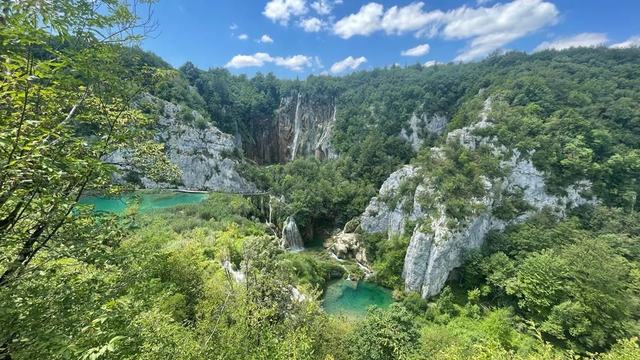
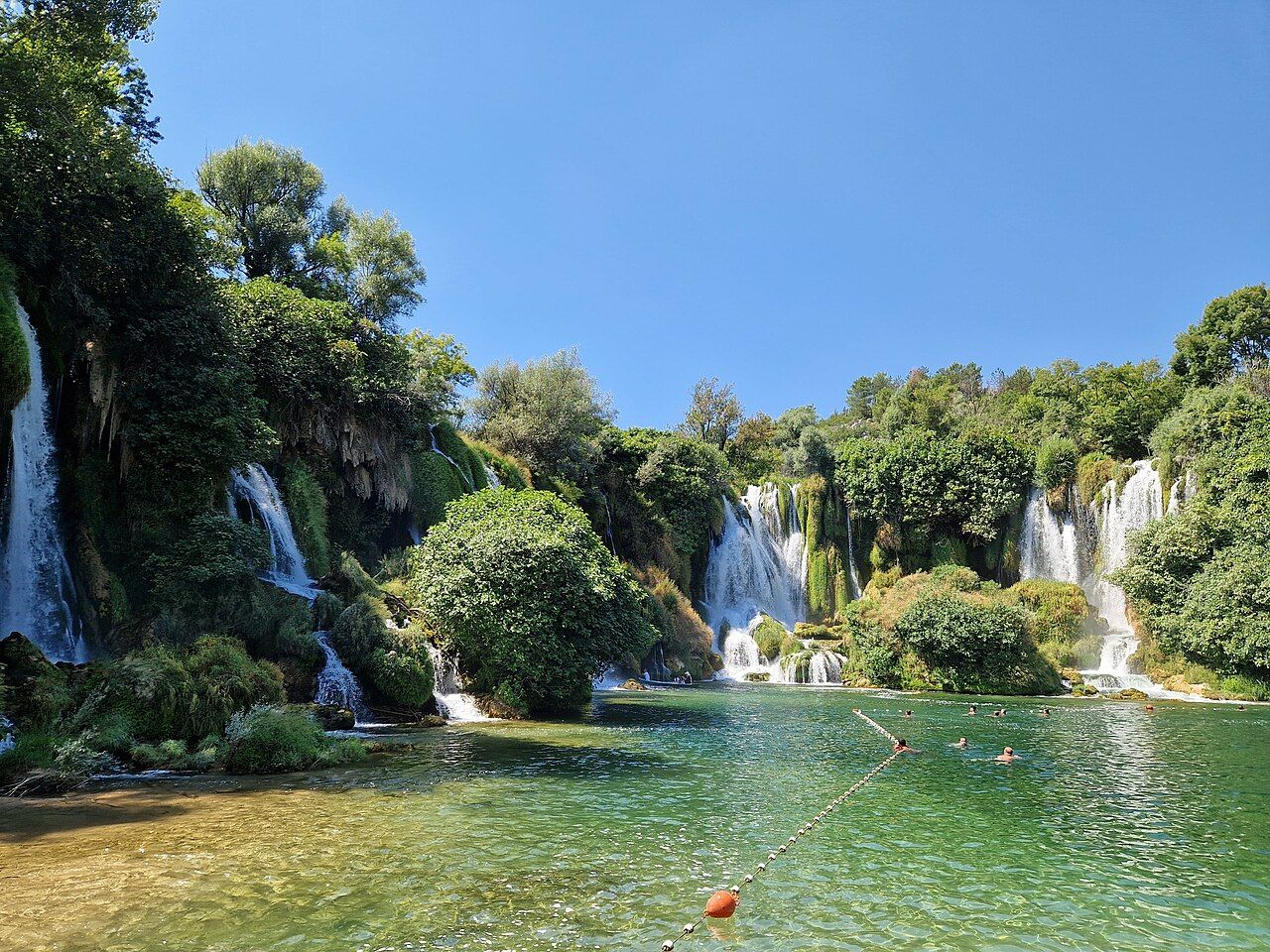
A wide horseshoe of cascades pouring into a green pool, where swimming is usually allowed in summer. The water is cold, the paths down are steep, and arriving early beats the tour coaches.

CultureC

Blagaj Tekke

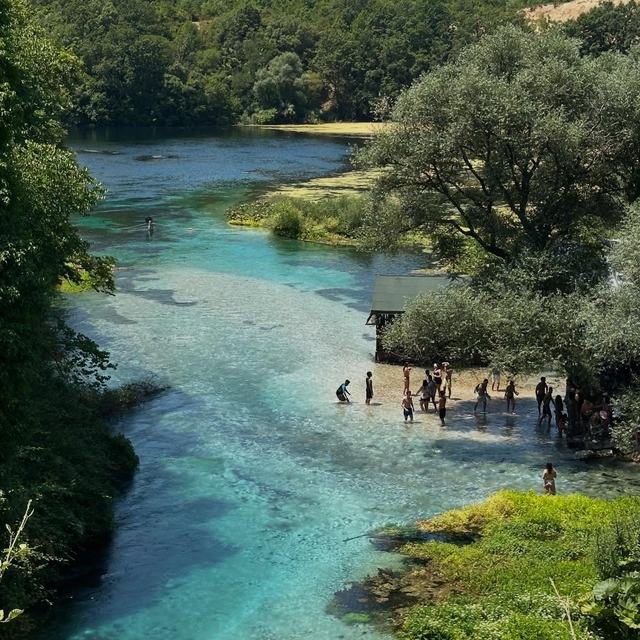
A dervish house built at the foot of a cliff where the Buna river rises from a cave. Shoulders and knees must be covered inside, and shoes come off at the door.

HistoryD

Počitelj

An Ottoman-era village stacked up a hillside above the Neretva, with a mosque partway up and a fortress tower at the top. Steep stone steps, so sensible shoes and an early start in summer.

HistoryE

Tunnel of Hope

The museum at the house where a tunnel under the airport runway kept besieged Sarajevo supplied from 1993. A short stretch of the original tunnel is open, and it means far more with a local guide.

NatureF

Trebević cable car and bobsleigh track

A cable car lifts you from near the old town onto Mount Trebević, where the 1984 Olympic bobsleigh track lies abandoned under graffiti. Walk a stretch for the city views, and keep to marked paths.

AdventureG

Rafting on the Neretva

From spring to early autumn, rafting trips run through the canyon of the upper Neretva near Konjic. Snowmelt makes spring the liveliest, while late summer is gentle enough for many families.

FoodH

Herzegovina wine

The hills around Čitluk grow the white Žilavka and red Blatina grapes, which you will rarely see elsewhere. Family cellars welcome visitors; book a driver if you plan to taste more than a sip.

Food and drink

What to eat and drink

  • Ćevapi

    Little fingers of grilled minced meat stuffed into soft somun bread with raw onion and a spoon of kajmak. Sarajevo takes them very seriously.

  • Burek and pita

    Spirals of flaky pastry baked in round trays. Ask for burek and you get meat; the cheese, spinach and potato versions are sirnica, zeljanica and krompiruša.

  • Bosnian coffee

    Strong coffee brought in a small copper pot with a sugar cube and a piece of Turkish delight. It is meant to be sipped slowly over conversation, never rushed.

  • Begova čorba

    The bey's soup, a creamy chicken and vegetable broth thickened with okra, served in the old Ottoman-style restaurants of Sarajevo.

  • Tufahija

    A poached apple stuffed with walnuts, soaked in syrup and topped with whipped cream, the dessert that ends many Bosnian meals.

Money

What Bosnia and Herzegovina costs

Bosnia costs little on the ground: guesthouses, grills and coffee are cheap by any European measure. The money is better spent on local guiding, above all in Sarajevo, where a guide who grew up with the city's recent history explains the 1990s in a way no museum label can. The hidden cost is logistics. Hire cars taken over from Croatia need the rental company's permission, and one-way drop-offs between countries carry steep fees, so we often suggest a driver for the Bosnian leg.

Flights and transfers

Getting to Bosnia and Herzegovina from the UK

Bosnia usually joins a Croatian trip: Mostar sits a couple of hours from Dubrovnik and the Dalmatian coast, which is exactly how we route it. Direct flights to Sarajevo from the UK are limited, so one stop or the road from Croatia are the realistic options.

Flights from UK airports

Sarajevo SJJ

  • Leeds BradfordWith a connection, about 5h 10m
  • ManchesterWith a connection, about 6h
  • NewcastleWith a connection, about 5h 25m

Dubrovnik (Croatia) DBV

  • Leeds BradfordDirect, about 2h 50m
  • ManchesterDirect, about 2h 55m
  • NewcastleDirect, about 2h 50m

Split (Croatia) SPU

  • Leeds BradfordDirect, about 2h 55m
  • ManchesterDirect, about 2h 50m
  • NewcastleWith a connection, about 4h 20m

Route check September 2026. Some routes are seasonal and schedules change, so we confirm the live options when we quote.

Practical details

Know before you go

Time

1 hour ahead of the UK

Currency

Convertible mark (BAM, KM); euros often accepted in tourist areas

Language

Bosnian, Croatian and Serbian

Plugs

Type C and F, 230V

Driving

On the right

Tap water

Generally safe to drink in the towns; bottled water is cheap if you prefer it

Tipping

Round up the bill, or leave around 10 percent for good restaurant service

Entry for British passport holders

Visa. No visa needed for stays of up to 90 days within 6 months. Make sure your passport is stamped on entry and exit.

Passport. Issued less than 10 years before you arrive, and valid for at least 90 days after you leave.

Summarised from the FCDO travel advice on gov.uk, checked 29 September 2026. Rules change: read the current entry requirements and the full travel advice before you go.

Questions we get asked

Bosnia and Herzegovina FAQs

Is Bosnia and Herzegovina safe to visit?+

Yes, and visitors are warmly received. The one rule that matters is to stay on paved roads and marked paths in the countryside, because landmines from the 1990s war still remain in some rural areas. Towns, main roads and the sights in this guide are cleared and busy with visitors.

Can you visit Mostar as a day trip from Dubrovnik?+

You can, and many coach tours do, but it is a long day with a border crossing each way that can mean queues in summer. You also arrive when the old town is at its most crowded. One night in Mostar changes the experience completely.

How long should you spend in Sarajevo?+

Two full days is the minimum: one for the old town and the Austro-Hungarian centre, one for the Tunnel of Hope and the recent history with a guide. A third day lets you add Trebević and slow down over coffee, which is how the city is meant to be enjoyed.

What should you wear in Bosnia?+

Normal European clothes are fine in the towns. To enter a mosque or the tekke at Blagaj, cover shoulders and knees, remove shoes, and women should bring a scarf for their hair, although some places lend them. Pack trainers rather than sandals for Mostar's cobbles.

Should we hire a car or use a driver in Bosnia?+

A driver is often simpler. A car hired in Croatia needs the company's permission to cross the border, and dropping it in another country costs a great deal. Mountain roads are slow and winding, and a local driver doubles as an informal guide to what you are passing.

What currency does Bosnia use?+

The convertible mark, shown as KM or BAM. Euros are accepted in many tourist businesses, usually at a rounded rate, with change given in marks. Cards work in hotels and larger restaurants, but carry cash for bakeries, cafés and small entry fees.

Your world, your way

Thinking about Bosnia and Herzegovina?

Tell us roughly what you have in mind. We will compare the flights, hotels, routes and operators, explain the trade-offs and build the version that works for you.

Start your trip