
Historic towns, islands and clear water, with the route deciding whether it feels relaxed or rushed.
We’ve been hereCouplesOld townsIsland hopping
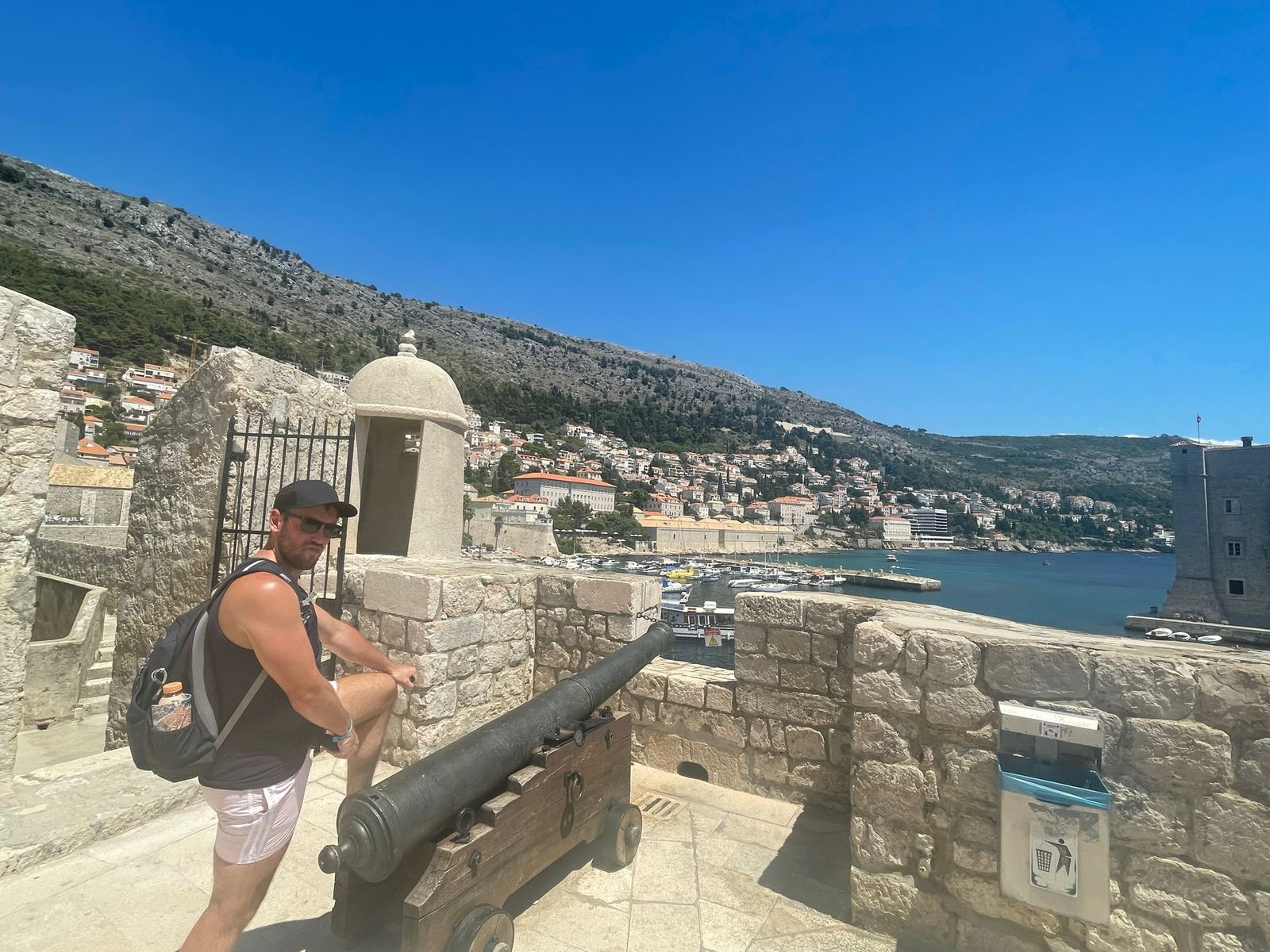
Photo: Si & Beth
Flight2h 50m directfrom Leeds Bradford
Time1 hour ahead of the UK
Typical stay7 to 10 nights
CurrencyEuro (€)
How we book itPackage or bespoke
Is it right for you?
Who Croatia suits
A strong fit for
Couples, families and touring holidays.
We would think twice for
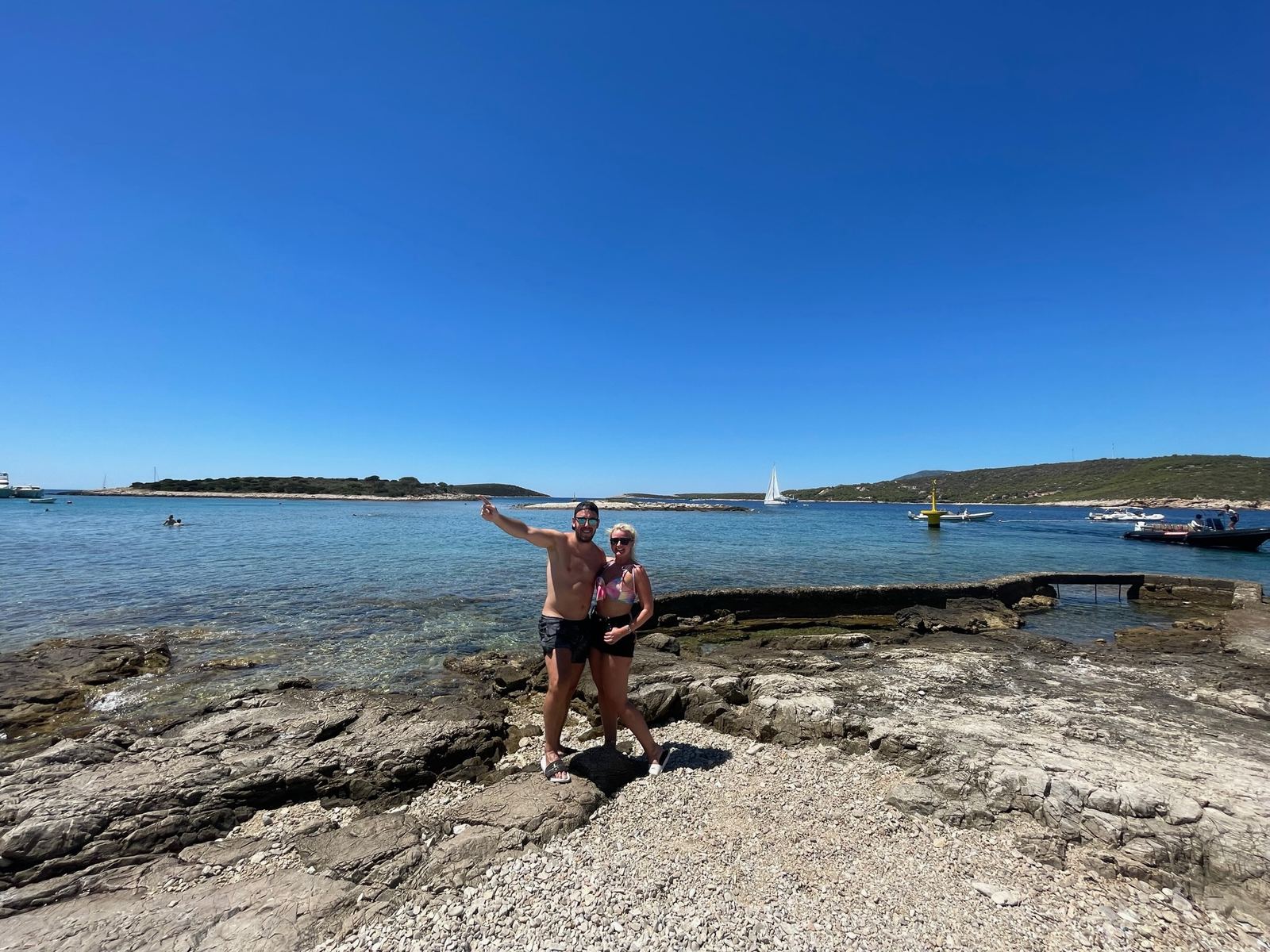
Travellers who picture long sandy beaches, because Croatia's coast is pebble coves, rock platforms and crystal water, beautiful to swim in and unforgiving to sandcastle ambitions.
What we would want you to know
Ferries, stairs and old-town access need planning.
We’ve been here
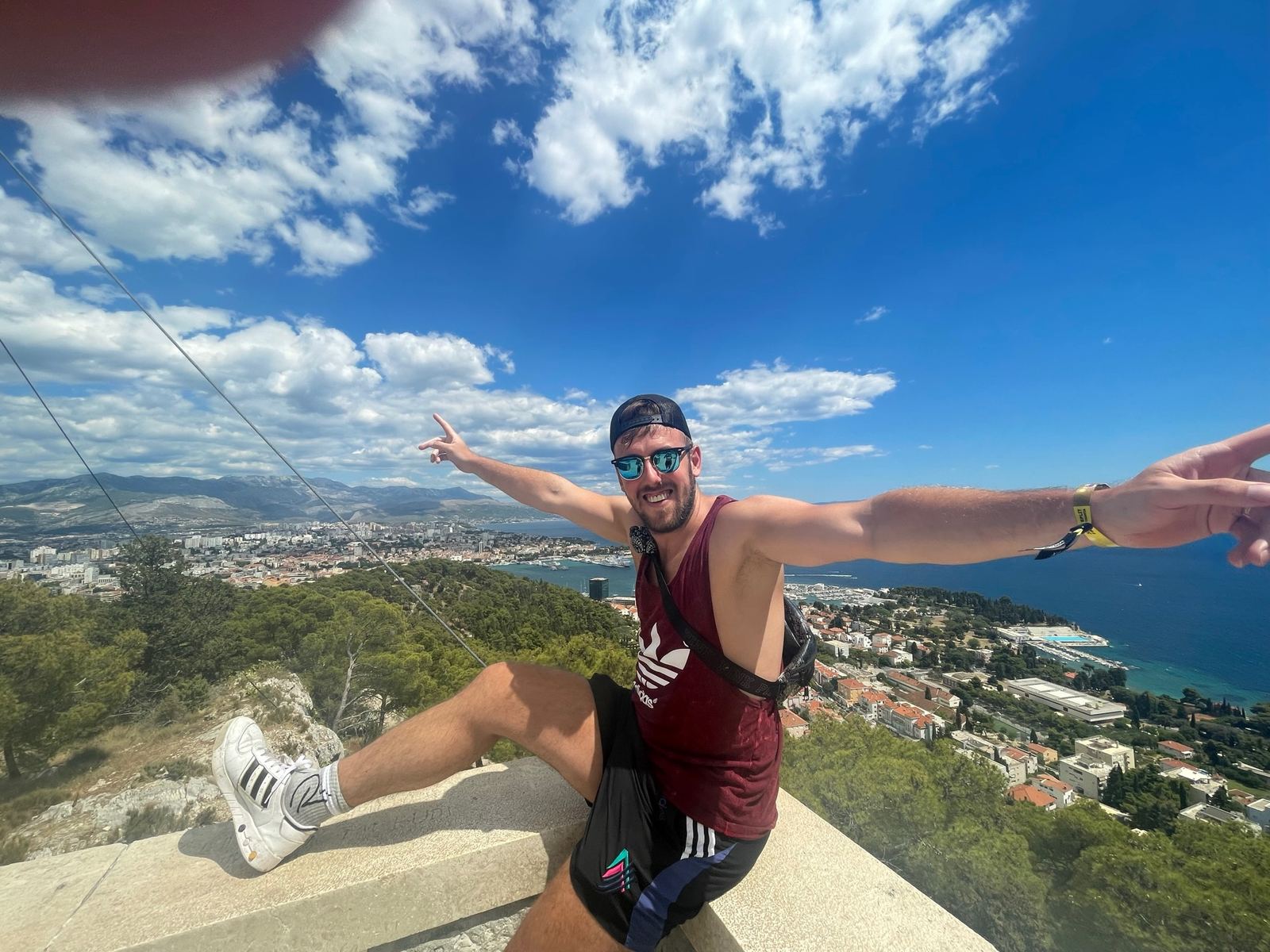
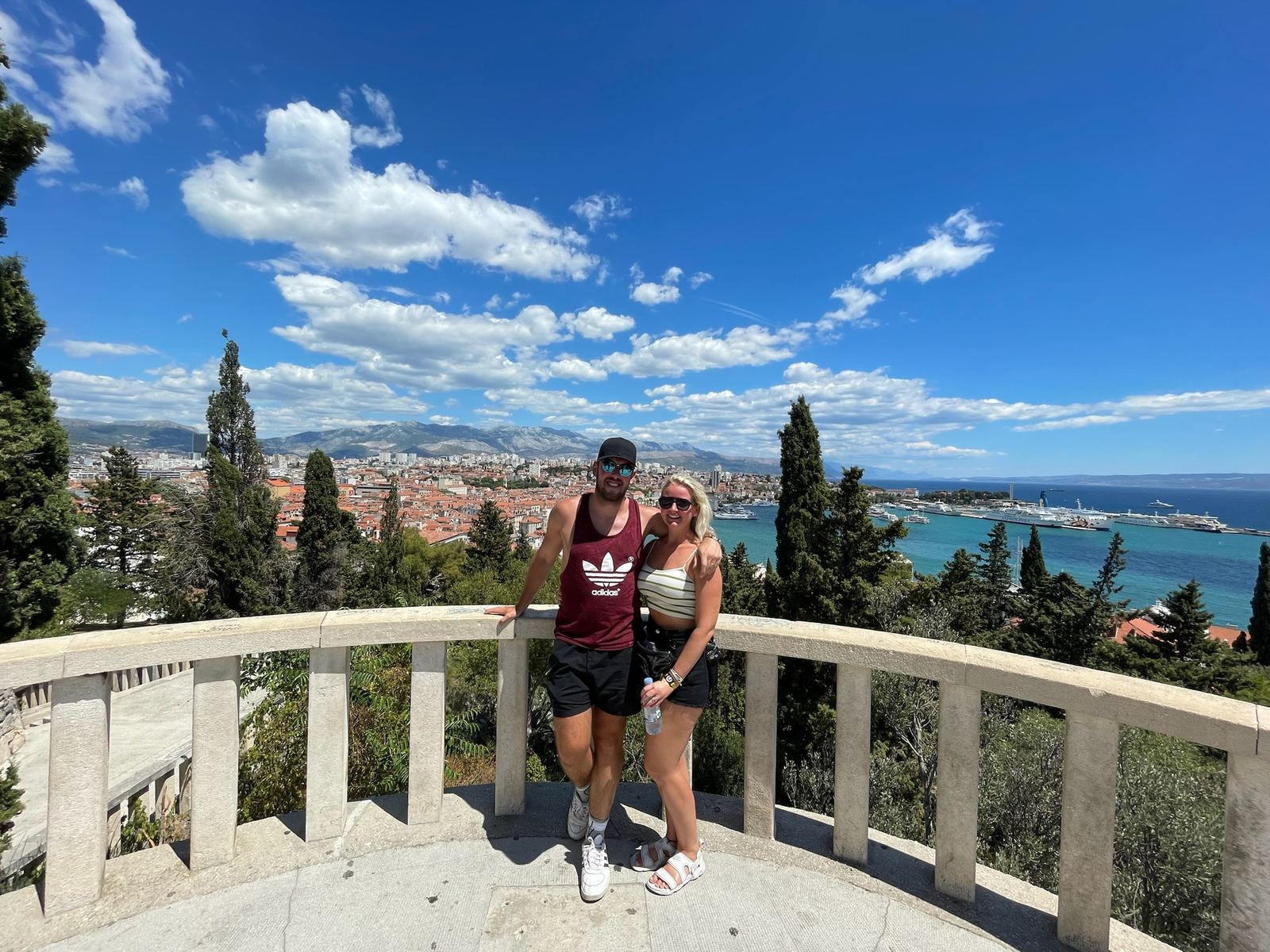
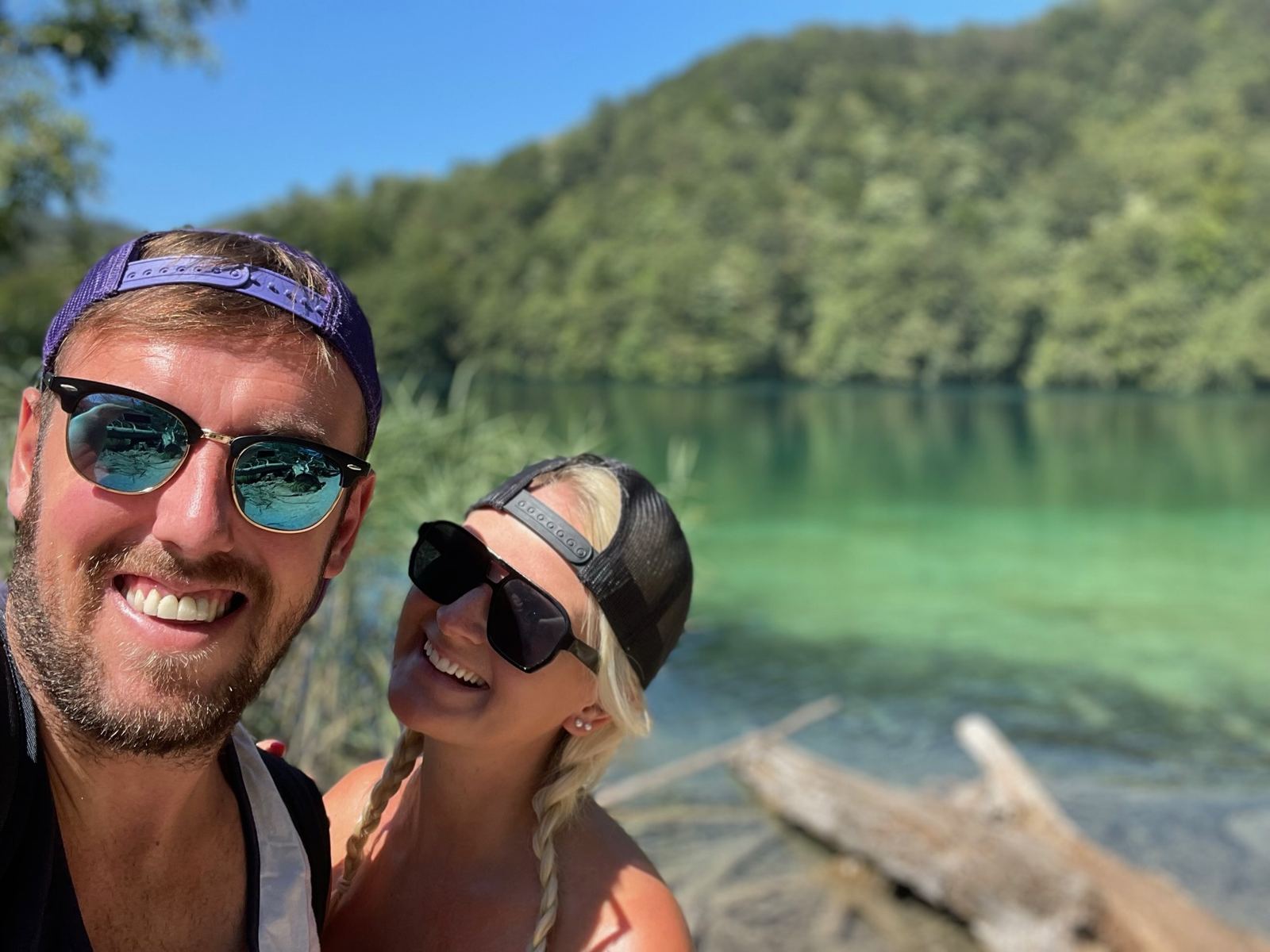
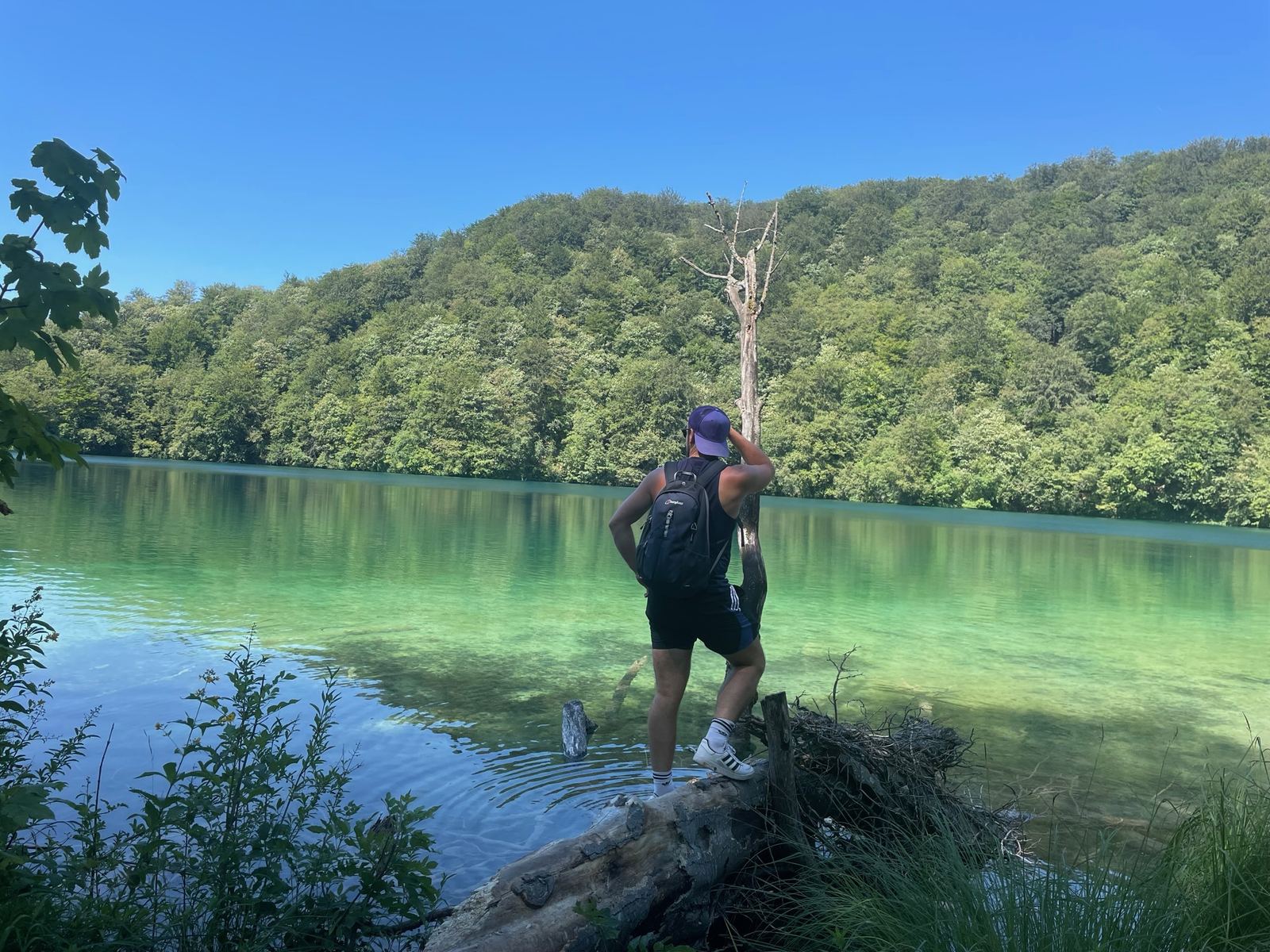
Our July 2022 trip took in the Plitvice Lakes, Zadar, Split, Hvar and Dubrovnik, so we have seen this coast in the thick of the summer season. That is why we plan Croatian routes around early starts, ferry bookings and at least one slow day, rather than squeezing every island into a week.
The route
Dubrovnik to Split by sea
Nights 1 to 3
Dubrovnik
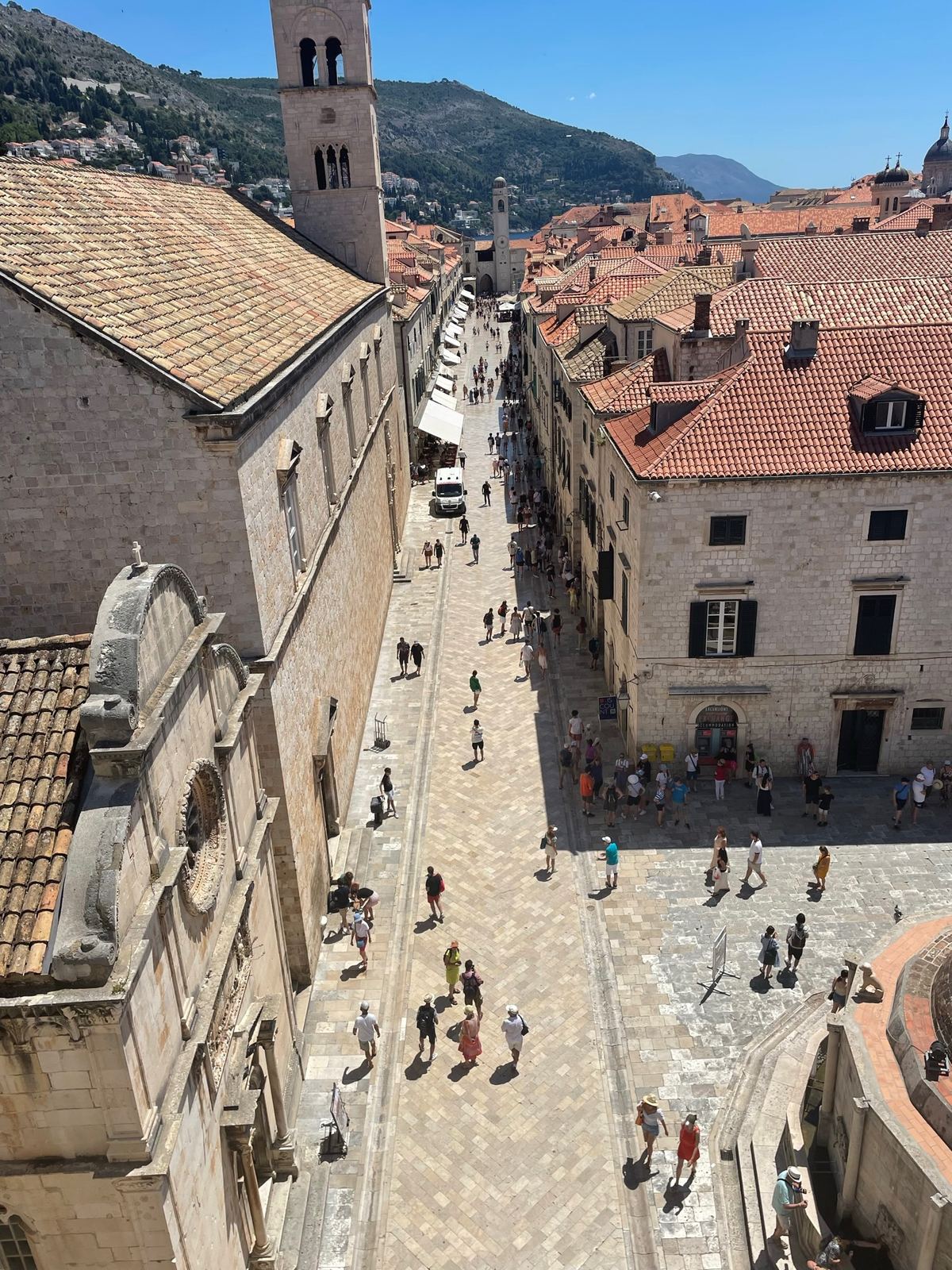
Walk the walls at opening time, spend an afternoon on Lokrum and take a day along the Pelješac peninsula to Ston for the walls and the oysters.
Nights 4 and 5
Korčula
A catamaran north to Korčula town for quieter evenings, a Moreška performance if the dates line up, and a boat across to the Pelješac vineyards.
Nights 6 and 7
Hvar
On to Hvar for the harbour, the fortress at sunset and a taxi boat out to the Pakleni Islands for a lazy day of swimming.
Nights 8 to 10
Split
Finish in Split with the palace and the Riva, a morning boat from Trogir to the Blue Lagoon, and a day at the Krka waterfalls.
Optional night 11
Plitvice Lakes
Drive inland, sleep close to the park entrance and walk the boardwalks at opening time the next morning, when the lakes are at their quietest.
An idea to react to, not a fixed package. We shape the real thing around your dates, your pace and what the flights are doing that season.
Map and stops
The places on the route
Places to stay Things to do Airports
1
Dubrovnik
First visitsHistoryCouples
The walled old town is the reason to come, car-free and polished smooth by centuries of feet, but it is steep, stepped and packed on cruise-ship days. Staying just outside the walls, in Ploče or Lapad, is calmer and better value, with swimming off the rocks close by.
A small walled town on a peninsula, its streets laid out like a fishbone to catch the summer breeze and block the winter winds. It is calmer than Hvar or Dubrovnik, with the vineyards of Pelješac a short boat ride across the channel. Beaches are rocky coves, and the ferry timetable shapes every day out.
Hvar Town's harbour is the smartest address on the islands, with yachts moored stern-to the quay, a hilltop fortress and late bars. Lavender fields and quiet Stari Grad lie inland and on the north coast for anyone who wants the island without the party. August prices and night-time noise in the centre are the catch.
Croatia's second city grew up inside a Roman emperor's retirement palace, and people still live, shop and drink among its walls. It is the ferry hub for the central islands, with the wooded Marjan peninsula for walks and swims. Rooms inside the palace can be noisy at night, so light sleepers do better a few streets out.
A tiny medieval island town joined by bridges to the mainland and to Čiovo, close to Split airport. Its lanes take an hour to wander, the waterfront is lined with excursion boats, including those to the Blue Lagoon, and it makes a gentle first or last night of a trip.
Sixteen terraced lakes joined by waterfalls in forested hills far inland. Stay a night nearby, in a guesthouse or lodge, so you can be on the boardwalks at opening time before the coach tours arrive. Evenings are quiet and cooler than on the coast, and one night is usually enough.
Split's sea warms from 22°C in June to its peak in August, when the city averages 32°C and the island ferries run full. Late May and the first half of June give long, bright days before the European school holidays, and September keeps the warm water with far fewer people on the quays. Plitvice runs to a different climate altogether: cooler, greener and at its loudest in spring, when the falls carry snowmelt. From November the bura wind can close coastal bridges and cancel catamarans, and many island restaurants stay shut until Easter.
Worth timing a trip around
3 February
Feast of St Blaise
Dubrovnik's patron saint's day brings processions, relics carried through the old town and a city in its finest clothes, with none of the summer crowds.
Mid July to mid August
Split Summer Festival
Opera, theatre and concerts in Split's open-air settings, with performances staged in the Peristyle of Diocletian's Palace.
10 July to 25 August
Dubrovnik Summer Festival
Six weeks of drama, classical music and dance on stages in the squares, forts and courtyards of the old town. The bigger performances sell out, so book when the programme appears.
Early August
Sinjska alka
A knights' tournament in the inland town of Sinj, held since 1715 to mark a victory over Ottoman forces, with riders galloping to spear a small iron ring.
Summer evenings
Moreška in Korčula
A centuries-old sword dance performed in Korčula town, telling the story of two kings fighting over a captured princess, staged on set evenings through the summer.
Daytime high to night-time low Sea temperature Rainfall
See the numbers
Month
High
Low
Sea
Rain
January
11°C
6°C
14°C
71 mm
February
13°C
7°C
13°C
44 mm
March
15°C
9°C
13°C
49 mm
April
19°C
12°C
15°C
48 mm
May
23°C
16°C
18°C
68 mm
June
29°C
21°C
22°C
26 mm
July
32°C
24°C
24°C
10 mm
August
32°C
24°C
25°C
40 mm
September
27°C
20°C
23°C
59 mm
October
21°C
16°C
21°C
60 mm
November
16°C
12°C
19°C
124 mm
December
13°C
8°C
16°C
77 mm
Temperatures are 2015 to 2024 averages from NOAA records for Split Marjan, 1 km away at 122 m. Rainfall is from the same station and shows the typical (median) month, so one freak storm does not skew it. Sea temperatures: NOAA OISST, 1991 to 2020.
See the numbers
Month
High
Low
Rain
January
5°C
-4°C
109 mm
February
8°C
-2°C
46 mm
March
11°C
0°C
78 mm
April
16°C
3°C
84 mm
May
20°C
8°C
118 mm
June
25°C
12°C
120 mm
July
28°C
13°C
84 mm
August
28°C
13°C
69 mm
September
22°C
9°C
153 mm
October
17°C
5°C
103 mm
November
10°C
2°C
172 mm
December
6°C
-2°C
134 mm
Temperatures are 2015 to 2024 averages from NOAA records for Gospic, 42 km away at 565 m. Rainfall is from Bihac, 22 km away and shows the typical (median) month, so one freak storm does not skew it.
Things to do
Things to do in Croatia
HistoryA
Dubrovnik city walls
The full circuit gives the classic view over terracotta roofs and open sea. Start at opening time, carry water and a hat, and remember that the walk runs one way, with steep steps and very little shade.
HistoryB
Diocletian's Palace
Split's Roman palace is a living neighbourhood rather than a museum. Walk the vaulted cellars beneath it, stand in the Peristyle, then climb the cathedral bell tower for the view over the harbour.
NatureC
Plitvice Lakes National Park
Wooden boardwalks thread over turquoise lakes and past dozens of waterfalls, with an electric boat across the largest lake. Summer tickets are sold for timed entry and should be booked ahead, and swimming is not allowed anywhere in the park.
On the waterD
The Blue Lagoon near Trogir
A shallow, glassy channel between small islands off Drvenik Veli, reached by boat from Trogir or Split. In high summer it is busiest in the middle of the day, so an early departure makes the swim far more peaceful.
BeachesE
Zlatni Rat, Bol
A long tongue of fine pebbles on the island of Brač that shifts its shape with the wind and currents. The afternoon breeze makes it a windsurfing favourite, so mornings are the calm time for swimming. Catamarans run from Split.
On the waterF
The Pakleni Islands
A scatter of wooded islets just off Hvar Town, reached by taxi boat, with swimming coves, a naturist beach and beach bars. Go in the morning and pick your cove before the yachts drop anchor.
Day tripsG
Krka National Park
Waterfalls and wooden walkways within an easy day of Split or Trogir, with a riverboat from Skradin up to Skradinski Buk. Swimming beneath the falls ended in 2021, so bring walking shoes rather than a swimsuit.
FoodH
Ston walls and oysters
On the Pelješac peninsula, medieval walls climb the hillside above Ston's salt pans, and the bay at Mali Ston has farmed oysters for centuries. Walk the walls first, then eat oysters by the water.
NatureI
Lokrum
A wooded island a short boat ride from Dubrovnik's old harbour, with peacocks, a botanical garden and a small salt lake for swimming. Nobody may stay overnight, so the last boat back is not optional.
Food and drink
What to eat and drink
Peka
Lamb, veal or octopus slow-cooked with potatoes under an iron bell buried in embers. It takes hours, so most taverns need the order a day ahead.
Crni rižot
Black risotto coloured with cuttlefish ink, a Dalmatian staple that leaves your teeth grey for an hour afterwards.
Pašticada
Beef marinated in wine vinegar, then braised slowly with prunes and red wine and served with gnocchi. A Split family dish for feast days.
Soparnik
A thin pie of Swiss chard, onion and parsley baked on an open hearth, from the villages behind Split and protected by EU status.
Fish na gradele
Whole fish grilled over wood and dressed with olive oil, garlic and parsley. It is usually priced by the kilo, so ask for the weight before it goes on the fire.
Plavac Mali
Croatia's big red grape, grown on sun-baked slopes on Pelješac and Hvar, making strong, dark wines for grilled meat.
Money
What Croatia costs
The calendar sets Croatia's prices more than anything else: the same room in Hvar Town or inside Dubrovnik's walls can cost far more in August than in June. Catamarans and car ferries are good value, but they sell out on summer weekends, so we book the island legs early. A private boat for a day is where we think extra money goes furthest, reaching coves the big excursion boats skip. A hire car only pays its way for Plitvice and the interior.
What things cost there
Coffee in a café€1.80 to €3.50
Large local beer in a bar€4 to €7
Glass of house wine€4 to €8
Pizza€10 to €16
Fresh fish, per kiloaround €55 to €90
Dubrovnik city walls, adultaround €35 to €40
Plitvice Lakes entry, June to Septemberaround €40
Catamaran, Split to Hvar Townaround €12 to €30
Blue Lagoon boat trip from Trogiraround €40 to €70
Dubrovnik's old town and Hvar's harbour front charge the most; Split's back streets and the village taverns inland are noticeably kinder.
Typical prices in tourist areas, checked September 2026. A guide to budget with, not a quote.
Flights and transfers
Getting to Croatia from the UK
Direct seasonal flights run from Leeds Bradford and Manchester to Dubrovnik and Split, roughly May to October. The two cities anchor opposite ends of the same coast, which makes fly-in-one, home-from-the-other routes the smart shape.
Flights from UK airports
Dubrovnik DBV
Leeds BradfordDirect, about 2h 50m
ManchesterDirect, about 2h 55m
NewcastleDirect, about 2h 50m
Split SPU
Leeds BradfordDirect, about 2h 55m
ManchesterDirect, about 2h 50m
NewcastleWith a connection, about 4h 20m
Zadar ZAD
Leeds BradfordWith a connection, about 7h 20m
ManchesterWith a connection, about 5h
NewcastleWith a connection, about 11h 50m
Route check September 2026. Some routes are seasonal and schedules change, so we confirm the live options when we quote.
Practical details
Know before you go
Time
1 hour ahead of the UK
Currency
Euro (€)
Language
Croatian
Plugs
Type C and F, 230V
Driving
On the right
Tap water
Safe to drink
Tipping
Around 10 percent for good table service is appreciated, ideally in cash
Entry for British passport holders
Visa. No visa needed for tourist stays of up to 90 days in any 180-day period across the Schengen area.
Passport. Issued less than 10 years before you arrive, and valid for at least 3 months after the day you leave the Schengen area.
The EU Entry/Exit System is now in use, so you may be asked to register your fingerprints and photo at the border on your first visit. It is free.
Is Split or Dubrovnik the better base in Croatia?+
For island hopping, Split, because most ferries to Hvar, Brač and Vis leave from its harbour. For a city stay with day trips, Dubrovnik. On a week or more we would use both, arriving at one and leaving from the other, so nobody doubles back along the coast.
Are the beaches in Croatia sandy?+
Mostly not. The coast is pebble coves, rock platforms and concrete sunbathing terraces with ladders into very clear water. A handful of sandy bays exist, notably around Lopar on Rab, but plan on water shoes and swimming off rocks rather than building sandcastles.
How long do you need at the Plitvice Lakes?+
One full day covers the upper and lower lakes on foot and by boat. Stay the night before or after nearby so you can start at opening time, when the boardwalks are quiet and the light is soft; by late morning in summer the narrow paths queue with tour groups.
Do we need a car in Croatia?+
Not for a coast and islands route, where catamarans, ferries and transfers do the work and parking in old towns is a headache. A car makes sense for Plitvice, the interior and Istria. Since 2022 the Pelješac Bridge has let the coast road skip the short Bosnian stretch at Neum.
Can you island hop in Croatia without a yacht?+
Easily. Public catamarans and car ferries link Split and Dubrovnik with Hvar, Brač, Korčula and more, and they are reliable in summer. Book the popular sailings for July and August weekends, and allow slack in winter, when the bura wind can cancel crossings.
Is the Blue Lagoon near Trogir worth the boat trip?+
Yes, if you go early. The water is shallow, clear and calm, which suits children and nervous swimmers, but by midday in high summer the excursion boats moor side by side. A morning departure from Trogir, or a private boat that times the visit around the crowds, makes all the difference.
Photographs
Croatia in pictures, from our own trips
Photo: Si & BethPhoto: Si & BethPhoto: Si & BethPhoto: Si & BethPhoto: Si & BethPhoto: Si & BethPhoto: Si & BethPhoto: Si & Beth
Tell us roughly what you have in mind. We will compare the flights, hotels, routes and operators, explain the trade-offs
and build the version that works for you.