

Reviewed 10 November 2026
The short answer
The north gives you Hanoi, limestone scenery and mountains; the centre has Hoi An, Hue and beaches; the south is Ho Chi Minh City, the Mekong Delta and Phu Quoc. They have different weather in the same week, so choose regions by month. We travelled from Hanoi to Ho Chi Minh City ourselves in 2023, and we say below where our advice is first-hand and where it is research.
Three regions, three kinds of trip
Vietnam is 1,650 km long, and three quarters of it is hills and low mountains, by its foreign ministry's figures. The north has real seasons, with a cool winter. The centre is a strip of coast with an old trading port and a former royal capital. The south is hot all year and moves faster.
The table shows the average daytime high and the rain in each. No month is best everywhere, so each region below has its own best months.
| Month | The north (Hanoi) | The centre (Hoi An) | The south (Ho Chi Minh City) | |||
|---|---|---|---|---|---|---|
| High | Rain | High | Rain | High | Rain | |
| January | 21°C | 23 mm | 26°C | 92 mm | 33°C | 21 mm |
| February | 22°C | 20 mm | 27°C | 15 mm | 34°C | 3 mm |
| March | 25°C | 45 mm | 29°C | 29 mm | 35°C | 19 mm |
| April | 28°C | 89 mm | 32°C | 33 mm | 35°C | 50 mm |
| May | 33°C | 169 mm | 34°C | 86 mm | 35°C | 151 mm |
| June | 35°C | 174 mm | 36°C | 95 mm | 33°C | 263 mm |
| July | 34°C | 285 mm | 35°C | 130 mm | 33°C | 252 mm |
| August | 33°C | 322 mm | 35°C | 184 mm | 33°C | 252 mm |
| September | 32°C | 175 mm | 33°C | 355 mm | 32°C | 278 mm |
| October | 29°C | 104 mm | 30°C | 443 mm | 32°C | 266 mm |
| November | 27°C | 55 mm | 29°C | 494 mm | 33°C | 126 mm |
| December | 22°C | 23 mm | 26°C | 238 mm | 32°C | 41 mm |
Monthly averages from long-run weather records, the same figures as the destination guide. Rain is the total for a typical month.
Hanoi and the north: Ha Long, Lan Ha Bay and Ninh Binh
Hanoi is where most routes begin, and where ours did, Train Street included. The Old Quarter is narrow trade streets, street kitchens and scooters beside a lake. Two to four nights suits anyone who travels for food and atmosphere. The downside is the noise, so ask for a room at the back.
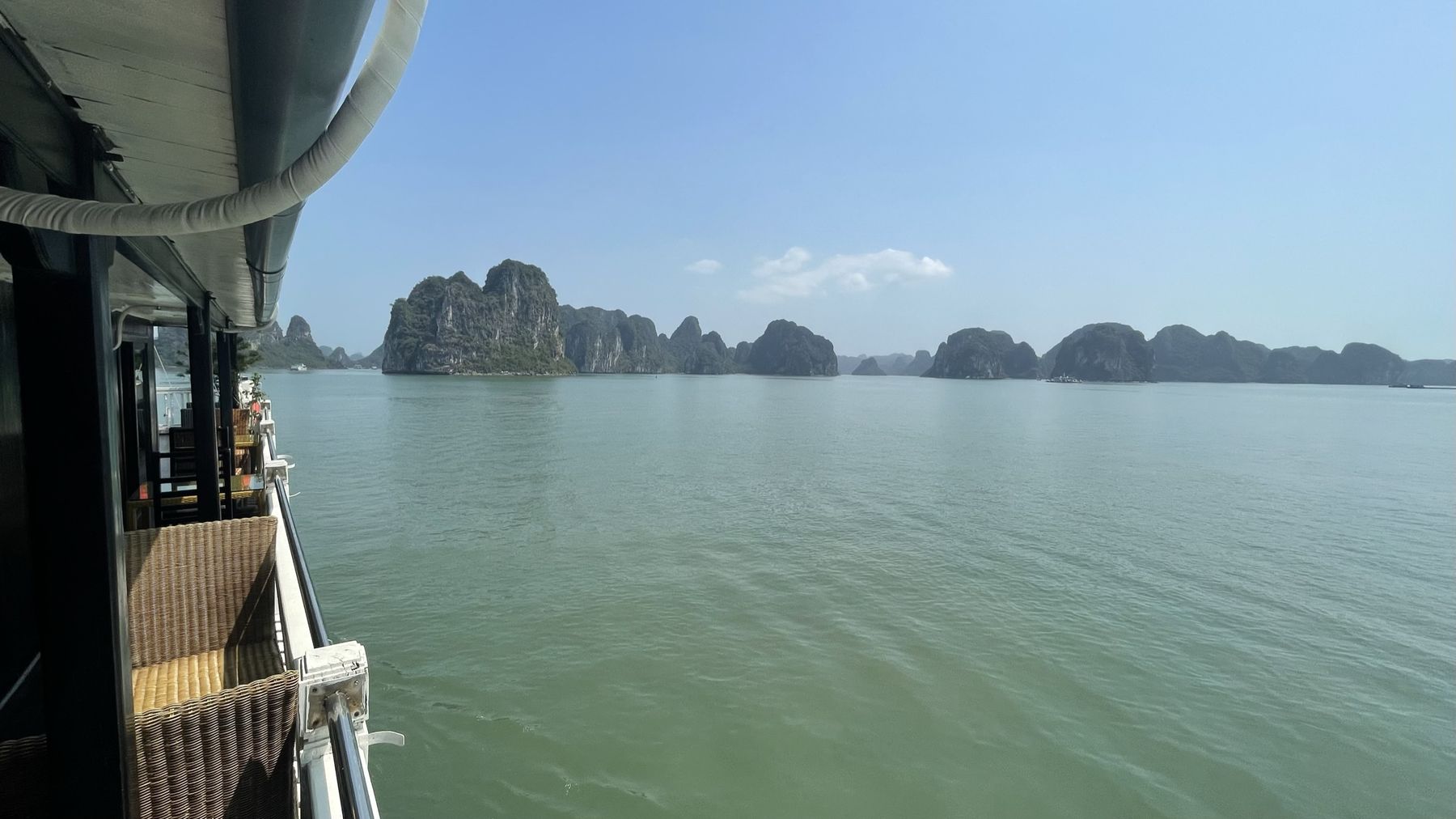
About two and a half hours east by road, the sea fills with the limestone islands of Ha Long Bay. We cruised Lan Ha Bay next door, with kayaking at sunset, and we point most people there because it has far fewer boats. One night afloat suits most trips. Worth knowing: the boat sets the timetable, and GOV.UK advises considering safety standards carefully before an overnight boat trip, so we choose the boat before the cabin.
Ninh Binh is the same limestone on land, about two hours south of Hanoi: rowing boats through caves, rice fields and bicycles. One or two nights beats a day trip, because the valleys are quietest before the coaches arrive.
Best months: October, November, March and April. Hanoi's average daytime high is 29°C in October and 25°C in March. December to February is dry but cool, at 21 to 22°C, and August is the wettest month, with 322 mm of rain in Hanoi and 485 mm at Ha Long Bay.
Sa Pa and the mountains
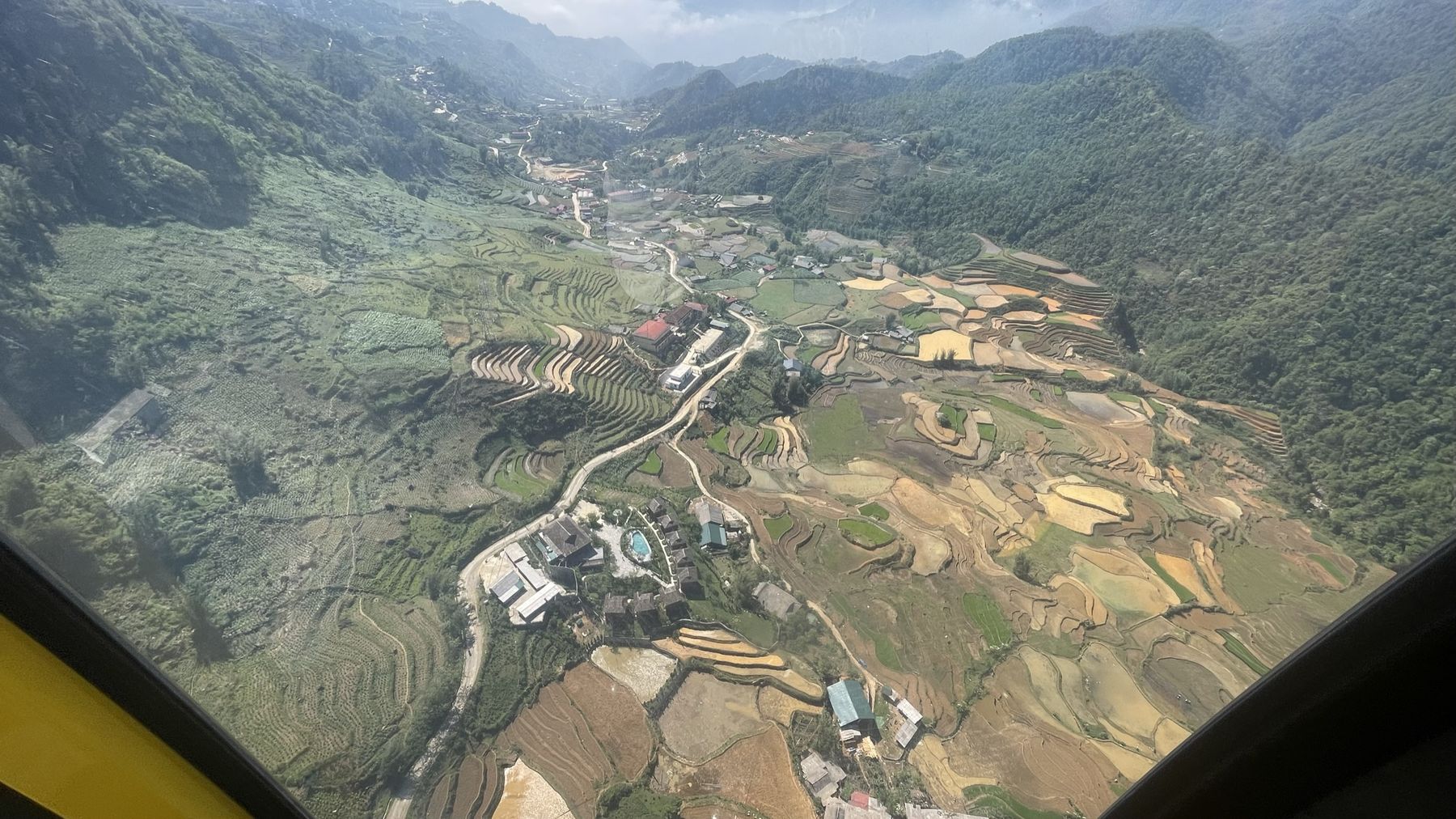
From Hanoi we went up to Sa Pa, a mountain town above a valley of rice terraces, and took the cable car to the top of Fansipan, at 3,143 metres the highest mountain in Indochina.
You get there by night train or expressway to Lao Cai, then a short transfer, so it needs at least two nights. It suits walkers and anyone who wants cool air. The downside is the distance, and cloud that can hide the view. Our climate figures do not cover Sa Pa; Vietnam's official tourism site calls it cool all year with cold winters, and best from September to November.
GOV.UK says British nationals have died or been injured in adventure tourism in Vietnam's rural and mountainous areas, and that in some places it is illegal to go without a guide. Walk with a local guide. If you plan to trek or ride a motorbike, compare travel insurance on the comparison sites and check the cover fits the trip. Declare every medical condition, or the policy may not pay out.
The centre: Hue, Da Nang and Hoi An
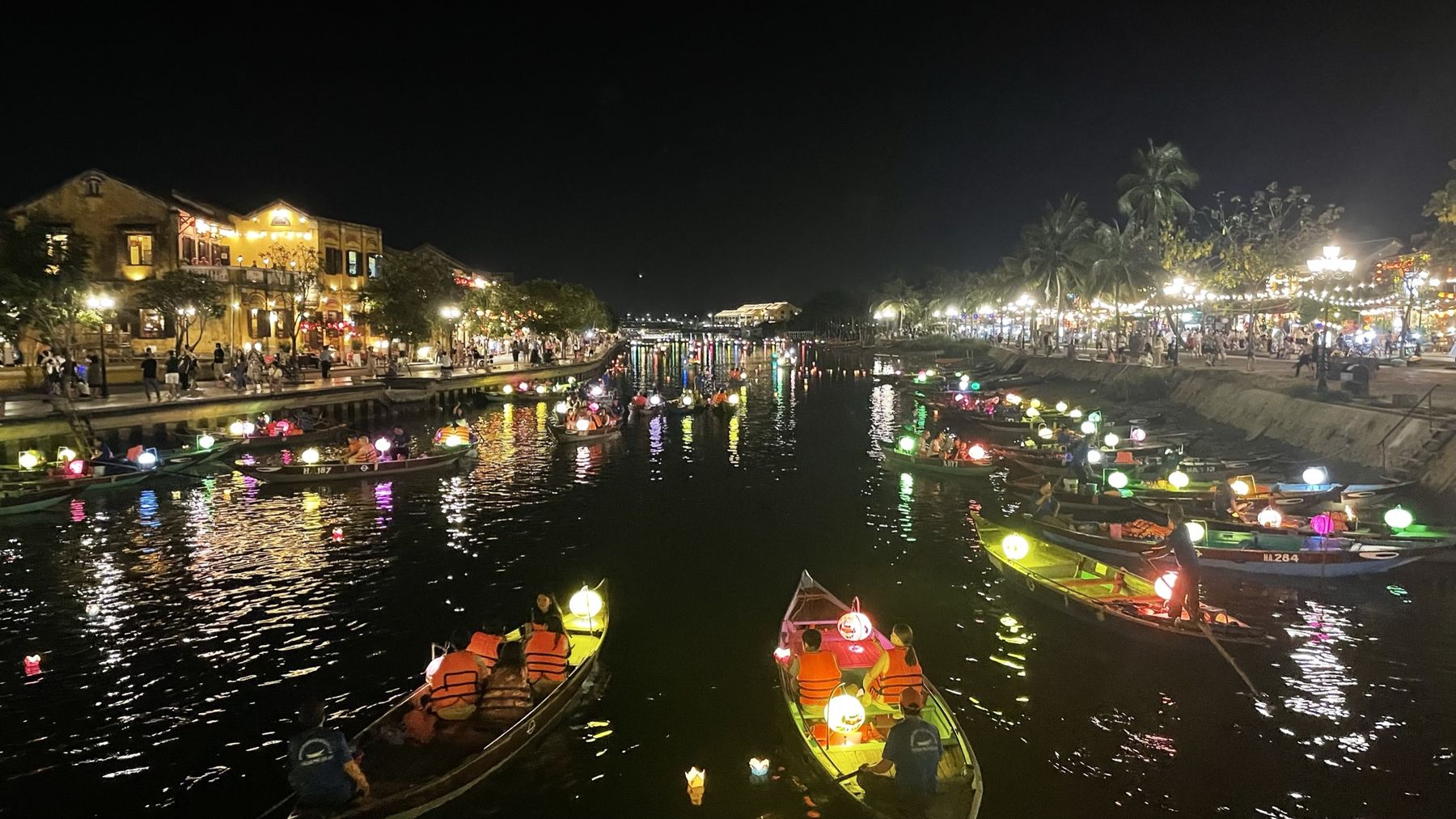
Hoi An is a former trading port of wooden merchant houses, lit by lanterns after dark. We spent three nights there, and three or four is right: the old town early and late, a tailor and a beach day. The downside is midday, when day-trippers fill the streets.
Da Nang is the modern beach city with the region's airport, 29 km from Hoi An's old town. It came next on our own trip, with an early start for Ba Na Hills, a hilltop park reached by cable car, before the crowds, and from there we crossed the Hai Van Pass by motorbike. One or two nights is enough.
Hue, linked with Da Nang by the Hai Van Pass road and the railway, was the capital of the Nguyen emperors, with a walled citadel beside the Perfume River. It is a stop we know from research and from planning routes. It suits history lovers, and a night or two covers it.
Best months: February to May, when Hoi An has 15 to 86 mm of rain a month and an average daytime high of 27 to 34°C. June to August is hotter, at 35 to 36°C, with the sea at 29 to 30°C. From September to December the rain runs from 238 to 494 mm a month, and GOV.UK says seasonal flooding occurs in October and November.
The highlands and the coast: Da Lat and Mui Ne
Da Lat is a hill town at 1,500 m. On our trip it brought cooler air and the strange architecture of the Crazy House. Its airport, about 30 km away, has flights from Hanoi and Ho Chi Minh City.
Mui Ne is a windy stretch of coast about four hours by road from Ho Chi Minh City, known for sand dunes and kitesurfing. Our own stop there was for the Fairy Stream.
Two nights in each is enough, and both suit a three-week trip. The downside is the road time, which is why we leave them out of a fortnight. Our climate figures do not cover either; the tourism site gives December to March as Da Lat's best time and November to April as Mui Ne's.
The south: Ho Chi Minh City, the Mekong Delta and Phu Quoc
Ho Chi Minh City, still Saigon to most locals, is newer, faster and hotter than Hanoi. We finished our own trip with five days there; most visitors need two or three nights for the war history, the markets and the food. It is not the Vietnam of temples and lanterns.
The Mekong Delta is the river country beyond the city: orchards, canals and floating markets. Our advice here is research-led. Can Tho is about three hours away by road, and a night there lets you reach the Cai Rang floating market at dawn. Day trips reach only the nearest branches and can feel staged.
Phu Quoc is the beach at the end, an island about an hour's flight from Ho Chi Minh City. We have not stayed there ourselves, so this is research and the experience of planning trips there. Four to seven nights suits couples and families. The downside is development: parts of the island are now very large resorts, so the stretch of coast matters.
Best months: December to April. Ho Chi Minh City has 3 to 50 mm of rain a month then, against 252 to 278 mm from June to October, and an average daytime high of 32 to 35°C all year. Phu Quoc is driest from December to March, at 11 to 67 mm a month, and wettest in September, at 536 mm.

How to choose
- Ten days: the north, plus either the centre or the south.
- Two weeks: the north, the centre and the south, or the north, the south and Phu Quoc.
- Three weeks: add Sa Pa, Da Lat and Mui Ne.
- October to December: leave out the centre.
- May to October: Phu Quoc is in its wet season, so take your beach days in the centre.
Tell us where you want to go
Tell us the dream: the month, how long you have and which of these places caught your eye. We explore the route with you, build it as one package under our own ATOL 12956, and you go and discover it.
Questions people ask
Which part of Vietnam is best for a first visit?+
The north, paired with either the centre or the south. Hanoi, the bays and Ninh Binh are close together and give the widest range in the fewest moves.
Is Hoi An or Hue better?+
For most first trips, Hoi An: it has the old town, a beach nearby and enough for three or four nights, and we have stayed there ourselves. Hue is for history, and a night or two is enough.
Where are the best beaches in Vietnam?+
It depends on the month. From November to April it is Phu Quoc, where February has 11 mm of rain and the sea is 28°C. From May to August the beaches near Da Nang and Hoi An are the better choice, with the sea at 28 to 30°C.
Is the Mekong Delta worth a night?+
If the floating markets are your reason for going, yes: the trading at Cai Rang is busiest at dawn, and Can Tho is about three hours from Ho Chi Minh City by road. For a first look, a guided day from the city is enough.
Where to check
Rules change. These are the official pages we used, and the ones we check again before your trip.
- Vietnam Ministry of Foreign Affairs: Key facts about Viet Nam
- GOV.UK: Vietnam travel advice, safety and security
- Vietnam Tourism (vietnam.travel): Ha Long
- Vietnam Tourism (vietnam.travel): Ninh Binh
- Vietnam Tourism (vietnam.travel): Sa Pa
- Vietnam Tourism (vietnam.travel): A traveller's guide to Vietnam's airports
- Vietnam Tourism (vietnam.travel): Hue
- Vietnam Tourism (vietnam.travel): Da Lat
- Vietnam Tourism (vietnam.travel): Mui Ne and Phan Thiet
- Vietnam Tourism (vietnam.travel): Can Tho
- Vietnam Airlines: Flights from Ho Chi Minh City to Phu Quoc
- Sun World Ba Na Hills: park page